

.
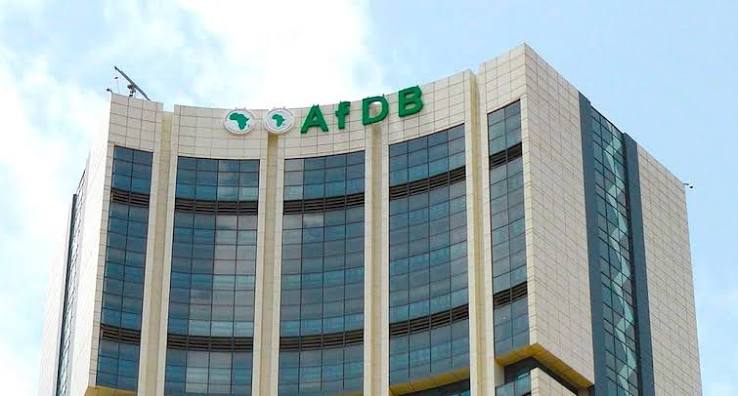
The African Development Bank Group (AfDB) and ODI Global have entered a strategic partnership to develop new financing instruments and policy solutions aimed at helping African countries overcome rising debt pressures, expensive capital and declining access to concessional funding.
The partnership, formalised through a new Memorandum of Understanding (MoU), comes as African governments face mounting pressure to finance infrastructure, energy, private-sector development and climate-related investments while borrowing costs remain elevated.
Rather than announcing a new lending facility, the agreement will combine the AfDB’s operational and financing expertise with ODI Global’s independent research capabilities to examine how Africa can access more affordable, longer-term capital.
AfDB and ODI Target Africa’s Financing Challenge
The two institutions will focus their collaboration on several areas, including reducing the cost of capital, mobilising private investment and developing financing approaches for countries facing structural vulnerabilities and economic transitions.
They will also examine how concessional and blended finance can be used more effectively, particularly as traditional development assistance comes under pressure.
African countries continue to face a significant mismatch between their development needs and access to affordable financing. The AfDB estimates that the continent has an annual development financing gap of more than $400 billion, even as it holds substantial pools of domestic savings and institutional capital.
The challenge, therefore, is not simply the amount of money available but how effectively capital can be transformed into affordable, long-term investment.
High Borrowing Costs Put Pressure on Development
The partnership comes against a backdrop of growing debt-service obligations across the continent.
The AfDB has warned that the shift by several African economies away from concessional borrowing towards commercial financing has increased debt-servicing costs and reduced fiscal room for public investment.
Its 2026 development effectiveness review said debt-service costs continue to constrain fiscal space, while 21 African countries remained in debt distress or at high risk of debt distress between 2023 and 2025.
The increasing reliance on commercial creditors has also changed the composition of African public debt. Private creditors accounted for 16.3% of the continent’s total debt in 2024, up from 12% in 2010.
For governments, the consequence is straightforward: more revenue is being directed towards servicing existing obligations, leaving less available for infrastructure, healthcare, education and productive investment.
New Financing Tools on the Agenda
Under the partnership, AfDB and ODI Global will investigate reforms to multilateral development banks and Africa’s wider financial architecture that could improve access to capital.
The institutions will compare financing mechanisms that can deepen capital-market access and increase the use of blended and concessional finance.
They will also assess ways multilateral development banks can mobilise larger volumes of private capital through tools such as guarantees, insurance, portfolio offloading and other risk-sharing arrangements.
These instruments are designed to reduce some of the risks that discourage institutional investors from committing long-term funds to African infrastructure and other development projects.
Ould Tah: Financing Must Reflect African Realities
AfDB President Dr Sidi Ould Tah said the partnership is intended to ensure that financing solutions are designed around the actual conditions facing African economies.
“Designing financing around the realities of African economies is what turns ambition into results,” Ould Tah said.
He added that the collaboration should put rigorous, independent analysis behind financial instruments that can work effectively in African markets.
The emphasis reflects a broader shift within the AfDB towards mobilising significantly more capital rather than relying primarily on the balance sheets of development institutions.
ODI: Countries Need More Room to Invest
ODI Global Chief Executive Dr Sara Pantuliano said African governments are being asked to finance economic transformation, climate resilience and development while simultaneously dealing with expensive borrowing and shrinking access to concessional resources.
She said bringing together ODI’s research capacity and AfDB’s operational experience could help identify reforms that give governments greater flexibility to determine their own investment priorities without worsening their financial vulnerabilities.
For countries already facing tight fiscal conditions, the objective is particularly important because simply increasing borrowing could deepen debt problems rather than solve the infrastructure and investment gaps responsible for slowing development.
Partnership Builds on Earlier Global Finance Work
The new relationship is not the first collaboration between AfDB and ODI Global.
The institutions have previously worked together through the G20 and other multilateral platforms on issues including multilateral development bank capital adequacy, callable capital and balance-sheet optimisation.
The new MoU moves that engagement from individual projects and policy initiatives towards a longer-term strategic partnership.
Joint research is expected to contribute to policy discussions around the replenishment of the African Development Fund (ADF), the AfDB Group’s concessional financing arm for low-income African countries.
NAFAD at the Centre of Africa’s Financing Strategy
The collaboration will also support the implementation of the AfDB’s New African Financial Architecture for Development (NAFAD), which was endorsed under the Abidjan Consensus in April 2026.
NAFAD is designed to help close Africa’s annual financing gap by making greater use of the continent’s own resources, including domestic savings, local capital markets and continent-wide guarantee and risk-sharing mechanisms.
The AfDB has argued that Africa’s problem is not simply a shortage of capital. The continent has substantial domestic savings, but insufficient mechanisms to convert those resources into long-term, investable capital at the scale required for economic transformation.
At the Africa Forward Summit in May, the Bank said Africa has nearly $4 trillion in domestic savings but attracts only about 1% of global institutional capital and 4% of global foreign direct investment.
The Bigger Test: Turning Research Into Capital
For African governments, the value of the AfDB-ODI partnership will ultimately depend on whether its research produces financial instruments that can move beyond policy discussions into actual transactions.
The MoU does not announce a new loan fund, immediate financing allocation or specific project commitments. Instead, it establishes a framework for developing and testing approaches that could improve the terms under which African economies access capital.
That distinction is important as the continent confronts a financing gap exceeding $400 billion annually.
The immediate challenge is to lower the risks that make African capital expensive, deepen domestic financial markets and attract more private investment without adding unsustainable debt.
If the partnership succeeds in turning those objectives into workable guarantees, blended-finance structures and stronger capital-market mechanisms, it could help African economies mobilise more of their own resources while attracting additional international capital.
For a continent facing simultaneous pressure from debt, climate investment needs and infrastructure deficits, the ability to make capital cheaper, longer-term and more accessible could prove as important as the amount of capital available.