.
Vatar, the Nigerian startup behind viral browser game Lagos Life, has raised $500,000 in early-stage funding at a $10 million valuation, just days after launching the game and formally incorporating the company.
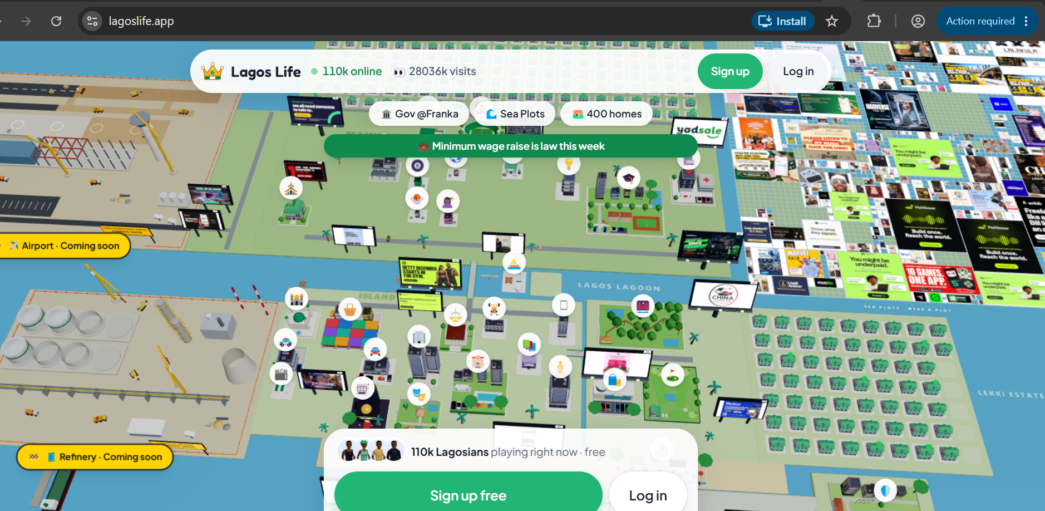
The funding comes as Lagos Life records rapid user growth, drawing millions of players into a virtual version of Nigeria’s commercial capital where they can create characters, find jobs, earn virtual naira, pay rent and interact with other users.
The company announced the investment nine days after the game’s October 1, 2026 launch, reporting that more than 4.7 million people had played it. The round was led by investors AB Hassan, Nathan Nwachuku and Olugbenga Agboola, chief executive of Flutterwave, according to reports.
The early fundraising gives Vatar capital to develop its product, recruit talent and explore additional virtual environments as it looks to turn the sudden popularity of Lagos Life into a sustainable business.
From Viral Game to Funded Startup
Vatar was founded by Shalom Rayhamen, who serves as chief executive, alongside Owen Rayhamen, its chief product officer, and Anderson Oriahi, its chief business development officer.
The company was incorporated on October 6, five days after Lagos Life went live. The speed of its launch and fundraising reflects the startup’s effort to build on the attention generated by the game before the initial wave of interest fades.
Rayhamen said the company closed the funding round quickly to allow the team to concentrate on improving the product and supporting its growing audience.
The $10 million valuation represents the value investors have placed on the young business following the funding round. It does not mean Vatar has raised $10 million in cash; the capital secured in the round was $500,000.
How Lagos Life Captured Players
Lagos Life recreates elements of everyday Nigerian urban life in a shared digital environment. Players can design avatars, pursue virtual jobs, earn money, pay rent and engage with other participants.
The game includes recognisable features of Lagos, such as danfo buses, power generators, local entertainment venues and familiar city experiences. It also incorporates a virtual political system in which players can participate in choosing leaders for the simulated city.
Rayhamen said the concept drew inspiration partly from The Sims 3, the life-simulation game she played as a child, and Lagos Run, a browser game centred on driving a danfo bus through Lagos.
The product’s local references have helped distinguish it from generic simulation games by placing Nigerian experiences at the centre of its virtual world.
AI Helped Accelerate Development
Rayhamen told TechCabal that she began building Lagos Life at about 9 p.m. on September 30 and released it at approximately 7 a.m. the following morning after working through the night.
She used artificial intelligence tools, including Anthropic’s application programming interface, to support research and coding during development.
The approach illustrates how AI-assisted software development can help small teams build and launch products rapidly. However, maintaining a game used by millions of people introduces additional demands, including infrastructure, security, content moderation and continuous product development.
Vatar has already begun expanding beyond Lagos, adding Port Harcourt to the virtual environment around October 6. The company says it intends to build more digital worlds rather than limit its ambitions to a single city.
Revenue Model Extends Beyond Gaming
Vatar is developing several ways to generate revenue from Lagos Life. These include advertising, music promotion, corporate partnerships and football streaming.
Businesses can advertise on virtual billboards or rent plots within the game, while musicians can pay to have their songs played in virtual clubs. The platform has also integrated commercial services, including Chowdeck, into players’ virtual phones.
Rayhamen said the company had earned and contracted more than $170,000 since launch, indicating that commercial interest has emerged alongside user growth.
However, the figure combines earnings and contracted business and should not be interpreted as confirmed net profit. The company has not publicly established whether its revenue exceeds the costs of operating the platform at scale.
Growth Brings New Operational Challenges
Lagos Life’s early popularity gives Vatar a significant opportunity to build a Nigerian gaming brand with wider reach. Yet user numbers alone will not determine whether the startup can sustain its momentum.
The company must keep players engaged, convert audience attention into recurring revenue and ensure that its infrastructure can support growth. Age verification, message screening, reporting and blocking tools are also important as more people interact within a shared online environment.
Vatar’s immediate challenge is to turn a viral launch into a durable business. The $500,000 funding round provides an initial financial cushion, while the $10 million valuation signals investor confidence in the opportunity.
Whether that confidence translates into long-term success will depend on the company’s ability to improve the game, develop reliable revenue streams and maintain a safe, engaging digital environment for its expanding community.