.
The World Bank Group is targeting up to $5.79 billion in private financing for Nigeria in the 2026 fiscal year, with a major small-business funding programme expected to support approximately 850,000 direct and indirect jobs.
The financing drive is designed to address gaps in digital infrastructure, agricultural productivity and access to capital for micro, small and medium-sized enterprises (MSMEs), as Nigeria seeks to translate economic reforms into stronger private-sector growth.
In a feature published on October 11, 2026, the World Bank Group said it was combining policy reforms, investment platforms, commercial financing and risk guarantees to attract private investors into sectors considered critical to the country’s economic transformation.
The initiative reflects a shift towards using development finance to mobilise additional private capital rather than relying exclusively on public funding for infrastructure and business
FINCLUDE Programme Targets 850,000 Jobs
A central component of the strategy is the Fostering Inclusive Finance for MSMEs in Nigeria programme, known as FINCLUDE, which aims to improve access to finance for more than 250,000 small businesses operating in employment-intensive sectors.
The programme combines a $500 million financing package from the International Bank for Reconstruction and Development and the International Development Association with risk-sharing arrangements intended to encourage financial institutions and other investors to lend to businesses that might otherwise struggle to secure funding.
The World Bank Group estimates that FINCLUDE could mobilise nearly $1.89 billion in private financing and support about 850,000 direct and indirect jobs.
Women-owned businesses are also a priority, with 30% of the programme’s financing targeted at women-led enterprises.
For Nigerian businesses facing high borrowing costs and limited access to affordable credit, the programme is intended to expand funding opportunities, support business growth and strengthen employment across productive sectors.
However, the projected jobs depend on the programme attracting the anticipated investment and translating that capital into viable business activity.
Broadband Expansion Could Attract $1.1bn
Digital infrastructure is another major pillar of the World Bank Group’s investment strategy.
Through the Building Resilient Digital Infrastructure for Growth (BRIDGE) project, the group is supporting a public-private partnership to develop a nationwide, open-access fibre-optic network.
The first round of investor selection is expected to attract at least $156 million in private equity, while subsequent rounds could unlock as much as $1.1 billion in private investment by 2030.
The project aims to extend affordable broadband access to an additional 58 million people, increasing coverage from 92 million people in 2025 to 150 million by 2030.
Its planned reach includes 38,800 public schools, 16,900 healthcare facilities and 3,400 local government offices, alongside millions of households.
The initiative is also expected to connect an additional 42 million young people and 15 million women to digital opportunities.
For Nigeria’s technology ecosystem, wider fibre coverage could support digital businesses, improve access to online services and strengthen connectivity for enterprises, schools and public institutions.
Agriculture Programme Targets One Million Farmers
Agriculture is another area targeted for investment mobilisation, with the World Bank Group’s Agricultural Value Chains for Growth (AGROW) project designed to reach one million smallholder farmers.
The programme focuses on improving seed and fertiliser systems, expanding digital agricultural platforms, increasing transparency and strengthening farmers’ links to markets.
AGROW is expected to attract approximately $220 million from agribusiness companies and another $22 million from certified seed producers.
The goal is to reduce investment risks across agricultural value chains while improving productivity, food security and commercial opportunities for farmers and agribusinesses.
The World Bank Group is also supporting larger investments in domestic fertiliser production through financing arrangements involving Dangote Industries and Indorama Fertilizer.
According to the institution, financing mobilisation for Dangote reached $1.02 billion, while $282.5 million was mobilised for Indorama through syndicated financing.
Together, the two projects have an aggregate production capacity of 6.8 million metric tonnes annually and are intended to improve access to agricultural inputs for more than 10 million smallholder farmers.
The investments are expected to reduce dependence on imported inputs and strengthen domestic supply chains.
IHS Towers Deal Highlights Role of Private Capital
Telecommunications infrastructure also features in the World Bank Group’s broader investment-mobilisation strategy.
The International Finance Corporation (IFC), a member of the group focused on private-sector development, served as an anchor investor in a $1.2 billion bond issuance by IHS Towers.
The transaction helped mobilise more than $1.1 billion from private investors, according to the World Bank Group.
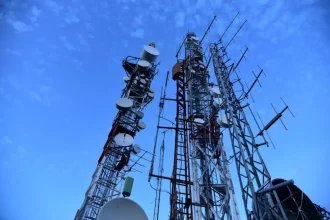
IHS Towers operates telecommunications infrastructure that mobile network operators use to extend coverage and improve connectivity without each company having to build all its own tower infrastructure.
The transaction illustrates how development finance institutions can use their participation to attract additional commercial investment into infrastructure projects.
Reforms Expected to Improve Investor Confidence
The World Bank Group said Nigeria’s reforms since mid-2023 including changes to foreign-exchange management, public finances and fuel subsidies have helped establish conditions for further private investment.
Additional reforms are aimed at deepening capital markets, expanding digital trade, enabling greater private participation in electricity and improving competitiveness.
The group’s institutions perform complementary roles in this process: the World Bank supports policy and development programmes, IFC helps structure investments and attract commercial capital, while the Multilateral Investment Guarantee Agency provides guarantees designed to reduce certain risks faced by investors.
The combined approach is intended to make projects more attractive to private capital while using development finance to address barriers that would otherwise discourage investment.
Investment Targets Face an Implementation Test
Although the $5.79 billion target signals the scale of the World Bank Group’s ambition, the amount represents financing it is helping to mobilise, not a single cash transfer to the Nigerian government.
The anticipated outcomes will depend on investors committing funds, projects progressing as planned and businesses using the financing productively.
For Nigeria, the key test will be whether the investment translates into stronger broadband access, more productive farms, improved financing for small businesses and sustainable employment.
If the programmes deliver their projected results, the strategy could help narrow infrastructure and credit gaps while strengthening the role of private enterprise in the country’s economic growth.
The ultimate measure of success, however, will be the amount of capital deployed effectively and the tangible benefits it creates for Nigerian businesses, workers and households.