.
The parent company of Kenya’s M-Gas cooking service is seeking fresh investment while awaiting a potentially higher-value carbon credit market opportunity, following the collapse of rival Koko Networks.
Circle Gas, the UK-based parent company of Kenyan pay-as-you-cook liquefied petroleum gas (LPG) provider M-Gas, is facing a financial test as it seeks to expand its clean-cooking business amid uncertainty over international carbon credit sales.
The company reported a net loss of $39.3 million for 2025, while its cash reserves fell to $1.1 million by year-end. Its financial statements also showed net liabilities of $156.7 million, up from $116.5 million a year earlier.
Circle Gas is seeking approximately $28 million in additional external funding to support its growth plans. However, the company’s ability to generate more revenue from carbon credits could depend partly on obtaining government authorisation in Kenya to sell those credits internationally at potentially higher prices.
The situation highlights the financial risks facing clean-cooking companies that rely on carbon credit income to subsidise fuel costs and expand access to cleaner household energy.
Carbon credits underpin the business model
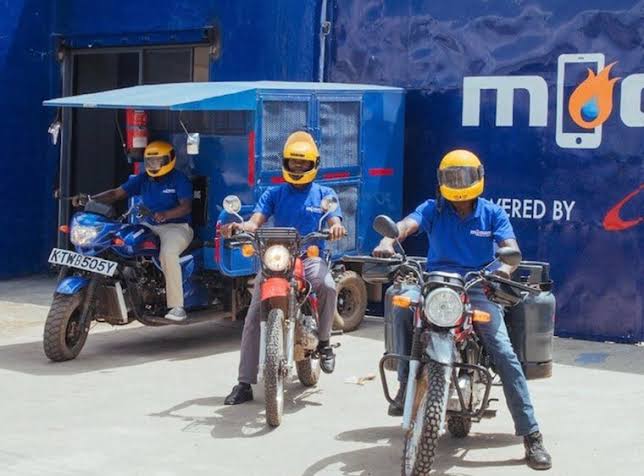
M-Gas uses smart meters to enable customers to purchase LPG in smaller, more affordable amounts, paying for the gas as they cook rather than buying a full cylinder upfront.
The model is designed to make cleaner cooking more accessible to households that might otherwise depend on charcoal, wood or other traditional fuels. Its technology also helps monitor consumption and manage gas replenishment.
Carbon credit revenue is an important part of the economics behind such services. When households move away from more polluting cooking fuels, projects may generate credits representing verified emissions reductions. Those credits can then be sold to buyers seeking to meet climate-related commitments.
Circle Gas reported $67 million in contracted carbon credits awaiting delivery at the end of 2025. It also disclosed $57 million in cash prepayments received against carbon credit contracts.
These figures represent different financial positions: the $67 million relates to contracted credits yet to be delivered, while the $57 million reflects advance payments already received. Neither figure should be interpreted as unrestricted cash available to the company.
The accounts do not disclose how much of the contracted portfolio depends on the outstanding authorisation or how much of the advance payments remains available for operating expenses.
Kenya’s approval process creates uncertainty
Circle Gas has reported that its carbon project has been cleared to apply for a Letter of Authorisation, a government approval that would enable eligible carbon credits to be transferred to international buyers under the relevant framework.
However, permission to apply does not mean the authorisation has been granted. The company’s accounts do not establish whether the final approval has been issued.
The potential financial benefit remains uncertain, and Circle Gas has excluded the expected additional value from its financial forecasts. The company has described the prospective upside as significant but has not disclosed a firm amount.
Kenya’s carbon market framework places limits on international transfers to protect the country’s own climate commitments. Its 2026 strategic guide establishes a cumulative ceiling of 10 million tonnes of carbon dioxide equivalent for international transfers through 2030, with annual allocations capped at 1.67 million tonnes.
Each application must be assessed within that framework, meaning approval is not automatic.
The issue has become especially important following the collapse of Koko Networks, another Kenyan clean-cooking company that shut down in January 2026 after failing to secure the authorisation needed to sell carbon credits internationally. The company’s closure demonstrated how regulatory decisions can affect businesses whose operating models depend heavily on carbon revenue.
Losses and limited cash intensify funding needs
Circle Gas increased revenue to $40.8 million in 2025 from $36.1 million in 2024, but that growth did not prevent a substantial annual loss.
The company’s financial statements indicate that it expects a net cash outflow of approximately $53 million between January 2026 and March 2027 under its planned operating scenario. Securing $28 million in additional investment is therefore central to its expansion strategy.
Without the new funding, Circle Gas says it would need to adopt a more limited operating plan. That could involve using existing smart meters, scaling back expansion in Tanzania and reducing spending on new meters in Kenya.
The company estimates that its funding requirement would fall to around $25 million under that reduced-growth scenario.
Its directors have relied on the more conservative plan when assessing whether the business can continue operating. The accounts also refer to advanced discussions with an unnamed sovereign clean-cooking initiative, although the outcome and value of those discussions remain uncertain.
Clean-cooking ambitions face a financial reality check
Circle Gas’s position illustrates a wider challenge for climate-focused businesses: environmental impact and customer growth do not necessarily translate into financial sustainability when a key revenue stream depends on regulatory approval.
For clean-cooking providers, carbon income can help offset the cost of equipment, distribution and fuel, making services more affordable for households. Delays or restrictions in accessing that revenue can leave companies exposed to cash shortages even when their services continue to attract customers.
For investors, Circle Gas now faces two closely linked tests: securing enough capital to sustain its operations and obtaining clarity on whether its carbon credits can access higher-value international markets.
The company’s financial projections do not rely on the additional revenue that authorisation could unlock. That cautious approach reflects the fact that the approval remains uncertain.
Ultimately, Circle Gas’s ability to expand M-Gas will depend on the funding it secures, the performance of its existing operations and the regulatory decisions governing its carbon credit portfolio. Kenya’s approach to carbon market approvals will also remain a critical factor for other clean-cooking businesses seeking to build sustainable models around emissions-reduction revenue.