.
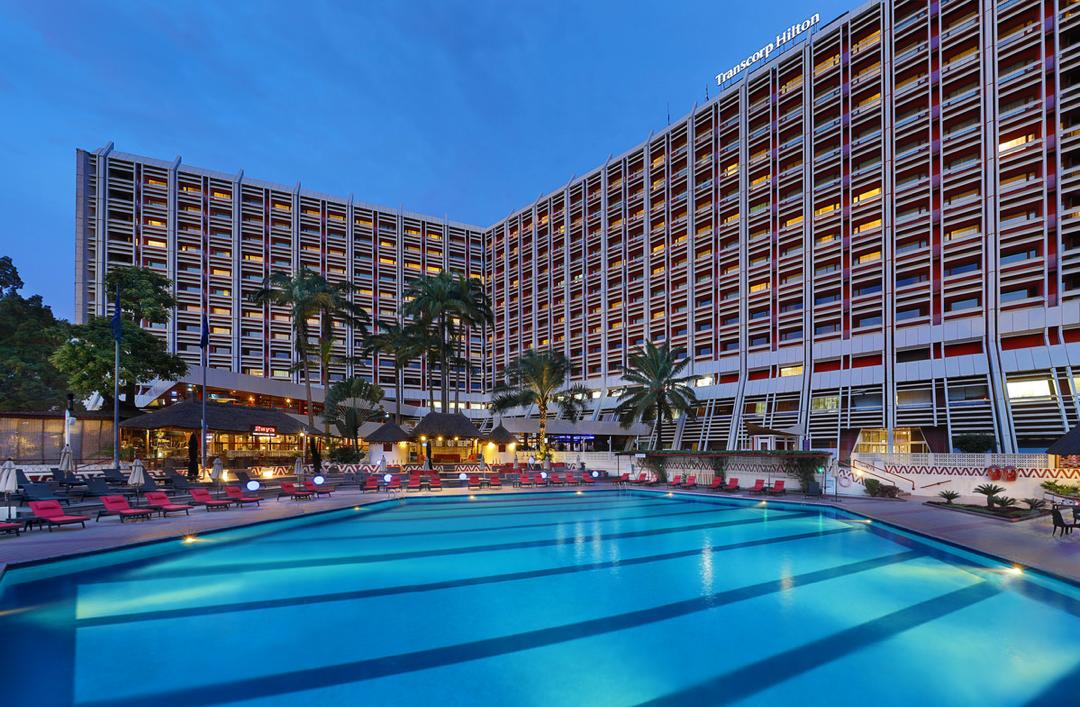
Transcorp Hotels Plc reported a profit before tax of ₦22.53 billion for the nine months ended September 30, 2026, representing a marginal 0.55% increase from ₦22.40 billion recorded in the corresponding period of 2025, despite a decline in revenue and operating profit.
The hospitality company’s unaudited financial statements filed with the Nigerian Exchange Limited (NGX) showed that revenue fell by 2.58% to ₦69.46 billion from ₦71.30 billion a year earlier. Gross profit also declined by 1.36% to ₦53.32 billion, while operating profit slipped 1.38% to ₦24.36 billion from ₦24.71 billion.
Nevertheless, profit after tax increased by 4.85% to ₦15.54 billion from ₦14.82 billion, supported partly by lower tax expenses and a significant rise in finance income.
Basic earnings per share improved to 152 kobo from 145 kobo, an increase of approximately 4.83%. The results point to a mixed performance, with the company maintaining growth in bottom-line earnings even as its core revenue-generating activities recorded softer figures.
Room Revenue Remains the Biggest Contributor
Accommodation remained Transcorp Hotels’ largest revenue source, generating ₦46.29 billion during the nine-month period, compared with ₦46.65 billion in the corresponding period of 2025.
Room revenue accounted for approximately 66.6% of total revenue, underlining the importance of accommodation services to the company’s business model.
Food and beverage revenue, the second-largest contributor, fell to ₦19.27 billion from ₦21.02 billion, representing a decline of about 8.32%. The category accounted for roughly 27.7% of total revenue.
Revenue from event-centre hall rentals dropped to ₦981.52 million from ₦1.15 billion, while shop rental income remained broadly stable at ₦1.36 billion.
Some smaller revenue lines recorded growth. Service-charge income rose to ₦690.64 million from ₦396.82 million, while recreation-service revenue increased to ₦443.25 million from ₦312.46 million. However, these gains were insufficient to offset the declines in accommodation, food and beverage, and event-centre rentals.
The figures suggest that the company’s overall revenue performance continued to depend heavily on demand for rooms and food services, which together accounted for most of its earnings from hospitality operations.
Lower Operating Costs Support Margins
Transcorp Hotels recorded some improvement in cost management during the period, with cost of sales declining to ₦16.15 billion from ₦17.26 billion.
The reduction helped lift gross profit margin to approximately 76.8%, compared with 75.8% in the corresponding period of 2025.
Operating expenses also eased to ₦29.32 billion from ₦29.86 billion, reflecting lower spending across several cost categories.
Employee costs declined to ₦4.46 billion from ₦4.55 billion, while energy expenses fell to ₦3.57 billion from ₦3.87 billion. Repairs and maintenance costs dropped to ₦2.06 billion from ₦2.99 billion, and management fees decreased to ₦7.62 billion from ₦8.03 billion.
However, depreciation expenses rose to ₦3.45 billion from ₦2.41 billion, while credit-card collection charges increased to ₦1.04 billion from ₦884.96 million.
The reduction in direct costs and operating expenses helped cushion the impact of weaker revenue, although operating profit still declined slightly year-on-year.
Higher Finance Costs Offset by Rising Finance Income
Finance costs emerged as a major pressure point, increasing to ₦5.91 billion from ₦2.80 billion in the same period of 2025.
Interest on debt accounted for much of the increase, climbing to ₦5.51 billion from ₦1.40 billion. The higher financing burden reflects the growing cost associated with the company’s borrowings.
At the same time, finance income rose sharply to ₦4.46 billion from ₦520.68 million. Much of the increase came from interest income on intercompany loan receivables, which expanded to ₦4.19 billion from ₦502.58 million.
The rise in finance income helped counter the increase in finance costs and supported the marginal growth in pre-tax profit.
However, the quarterly figures reveal a more challenging trend. Third-quarter profit before tax declined to ₦8.83 billion from ₦10.18 billion in the corresponding quarter of 2025, a drop of approximately 13.18%.
Operating profit for the quarter fell to ₦9.56 billion from ₦11.00 billion, while finance costs increased to ₦2.85 billion from ₦957.69 million.
The weaker third-quarter performance indicates that the company’s ability to sustain earnings growth may depend on its capacity to manage borrowing costs while improving revenue from its core hospitality services.
Assets and Borrowings Expand Significantly
Transcorp Hotels’ total assets rose to ₦206.82 billion as of September 2026, up from ₦159.91 billion at the end of December 2025.
Current trade and other receivables increased substantially to ₦50.53 billion from ₦11.00 billion. Cash and bank balances also grew to ₦20.34 billion from ₦16.96 billion at the end of 2025, representing an increase of approximately 19.94%.
However, total borrowings rose sharply to ₦54.96 billion from ₦10.52 billion over the same period. The increase in debt adds to the importance of monitoring financing costs and cash generation as the company expands its operations.
Cash flow from operating activities turned negative at ₦15.93 billion, compared with positive cash flow of ₦18.82 billion in the corresponding period of 2025.
Net cash used in investing activities stood at ₦5.92 billion, while financing activities generated net cash of ₦27.02 billion. Financing inflows included ₦44.48 billion in borrowing proceeds, while the company paid ₦13.32 billion in dividends.
Cash balances increased by ₦5.17 billion during the period, leaving Transcorp Hotels with ₦20.34 billion in cash and bank balances at the end of September.
The contrast between higher accounting profits and negative operating cash flow remains an important consideration for investors, particularly alongside the sharp rise in borrowings and receivables.
Transcorp Hotels Shares Gain 76.49% Year-on-Year
Transcorp Hotels’ shares closed at ₦290.50 on Friday, October 16, 2026, according to the market data reported alongside its results.
The price represented a 76.49% increase from ₦164.60 a year earlier, indicating a strong annual appreciation in the company’s stock despite the mixed nine-month operating performance.
Going forward, the key issues for investors will include whether the company can restore revenue growth, sustain cost efficiencies, improve operating cash flow and manage its expanding debt burden.
Although higher finance income and lower tax expenses supported the latest profit figures, continued earnings growth will ultimately depend on stronger performance from its core hospitality business and disciplined financial management.