.
Nigeria’s push to keep more internet traffic within its borders is placing data centre operators, telecommunications companies and internet service providers at the centre of efforts to improve connectivity, reduce avoidable network costs and strengthen the country’s digital infrastructure.
The issue will feature prominently at the 2026 Nigerian Peering and Interconnection Forum (ngPIF), scheduled for October 28 and 29 in Lagos, where regulators, network operators, data centre providers and technology companies are expected to examine ways of improving the exchange of internet traffic within Nigeria.
The discussions come as demand for cloud computing, digital payments, online content and other technology services continues to grow, increasing pressure on the infrastructure responsible for moving and processing data.
At the heart of the debate is internet traffic localisation: enabling data generated and consumed within Nigeria to travel between domestic networks without unnecessarily passing through infrastructure in other countries before returning to local users.
The approach could improve network efficiency and service delivery, but its success will depend on investment, commercial cooperation and stronger connections between the companies that make up Nigeria’s internet ecosystem.
Local Traffic Exchange Becomes a Strategic Priority
Adewale Adedokun, convenor of the Nigerian Network Operators Group (ngNOG), said Nigeria needed a more deliberate strategy for internet traffic exchange, content delivery and the infrastructure supporting digital services.
“As Nigeria’s digital economy continues to expand, we must pay closer attention to the infrastructure and interconnection arrangements that underpin it,” Adedokun said, highlighting local traffic exchange, stronger peering and access to resilient infrastructure as priorities for a more efficient internet ecosystem.
Internet traffic does not always follow the shortest geographical route. When networks lack direct connections or suitable commercial arrangements, data exchanged between users and services within the same country may travel through international networks before reaching its destination.
Local interconnection can reduce such unnecessary routing by allowing participating networks to exchange traffic directly. The potential benefits include more efficient use of network capacity, improved performance and reduced reliance on external transit services.
However, localisation does not automatically mean that all data must remain inside Nigeria. Its practical objective is to improve how domestic traffic is exchanged, while maintaining the international connectivity required for access to overseas websites, cloud platforms and digital services.
Data Centres Take on a Bigger Role
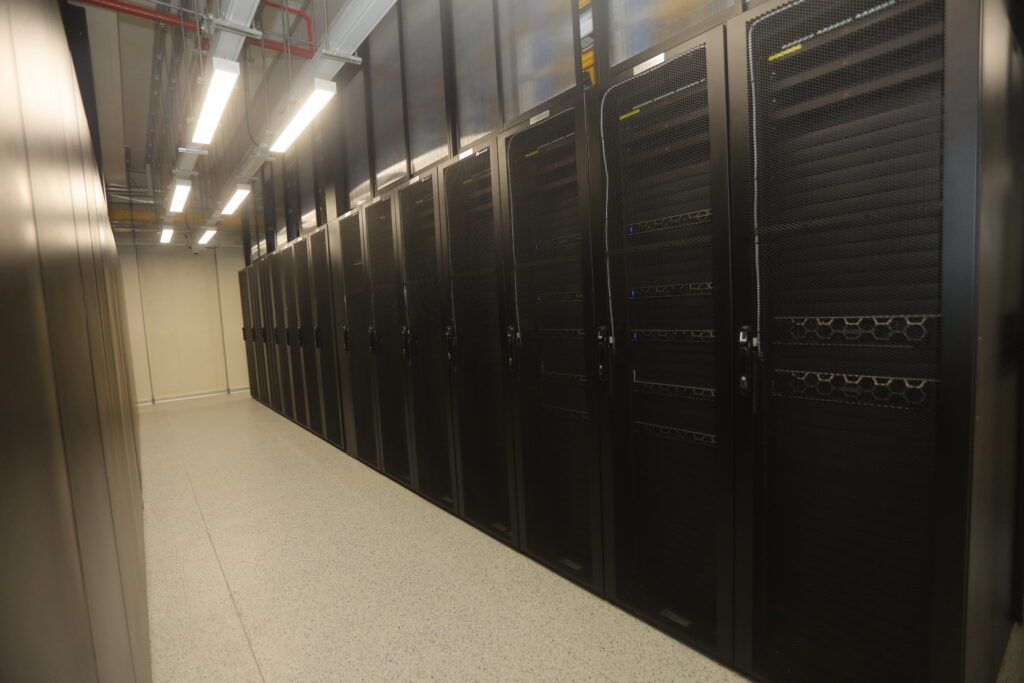
Data centres are expected to play a central role in the localisation drive because they provide the facilities where businesses, cloud providers and technology companies store and process information.
Locating digital services closer to their users can help reduce delays and improve access, particularly when the facilities are connected to several telecommunications networks and internet service providers.
Yet, the presence of a data centre within Nigeria does not, by itself, guarantee that internet traffic will remain local. The outcome also depends on where applications and content are hosted, which networks connect to the facility and whether those networks have arrangements to exchange traffic directly.
Stronger interconnection between data centres, telecom operators, internet service providers and content delivery companies could help more domestic traffic move through local infrastructure instead of taking unnecessary international routes.
For businesses relying on financial technology platforms, e-commerce, cloud applications and digital communications, more efficient routing could contribute to better service reliability.
The commercial benefits will depend on the amount of traffic that can be exchanged locally, the cost of interconnection and the willingness of infrastructure providers to invest in additional capacity.
Telecom Operators Face Coordination Challenge
Telecommunications operators and internet service providers connect users to online services and determine how traffic moves across their networks. Their participation is therefore essential to any meaningful localisation effort.
One mechanism is internet peering, through which networks exchange traffic directly rather than relying entirely on third-party transit providers. The technical arrangements and commercial terms differ across networks, meaning the benefits depend on the participants, capacity and volume of traffic exchanged.
Greater domestic peering could help operators improve network efficiency and reduce some avoidable routing costs as demand grows for video streaming, cloud services and other bandwidth-intensive applications.
However, achieving this requires cooperation among companies with different investment priorities, technical capabilities and commercial interests.
Adedokun stressed that no single stakeholder could resolve the challenges independently. Telecom operators, data centre providers, internet exchanges, content companies, regulators and technology firms must work together to strengthen domestic traffic exchange.
The challenge is to turn that cooperation into practical agreements and infrastructure improvements that benefit the wider internet ecosystem.