


.
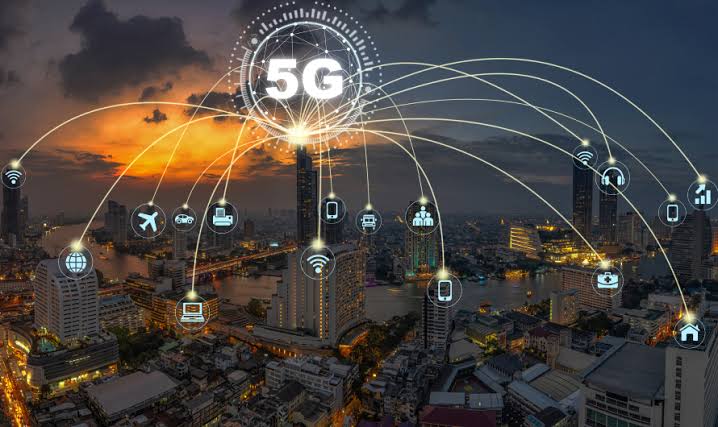
Nigeria is positioning itself as one of Africa’s most ambitious markets in the race toward widespread 5G adoption, as the continent’s next-generation mobile network rollout gathers momentum and is projected to exceed 380 million connections by 2030.
The growth outlook reflects a broader shift in Africa’s digital landscape, where governments and telecom operators are investing in faster networks, improved broadband access and infrastructure capable of supporting emerging technologies such as artificial intelligence, cloud computing and industrial automation.
Africa’s 5G Journey Gains Momentum
Globally, 5G has moved rapidly into mainstream adoption, with hundreds of commercial networks already deployed across multiple countries. By the end of 2026, worldwide 5G connections are expected to reach about 3.4 billion, representing a significant share of global mobile subscriptions.
Africa’s adoption curve, however, has been slower compared with more developed markets. According to industry projections, fewer than 100 million 5G connections are expected across the continent by the end of 2026, accounting for about 6.2 per cent of total mobile connections.
The pace is expected to accelerate significantly over the coming years, with 5G connections forecast to surpass 380 million by 2030, representing more than one-fifth of Africa’s mobile market.
Nigeria Expands 5G Infrastructure Ambitions
Nigeria has emerged as one of the countries taking a more aggressive approach toward 5G deployment.
The country has already allocated spectrum in key frequency bands, including 2600MHz, 3500MHz and 3700MHz, while preparations are underway for the licensing of 26GHz millimetre wave spectrum between 2026 and 2028 to support enterprise applications and specialised use cases.
The move places Nigeria among the few African markets planning for high-band 5G services, as many countries continue to focus primarily on mid-band spectrum because of its balance between coverage and deployment costs.
Adoption Challenges Remain
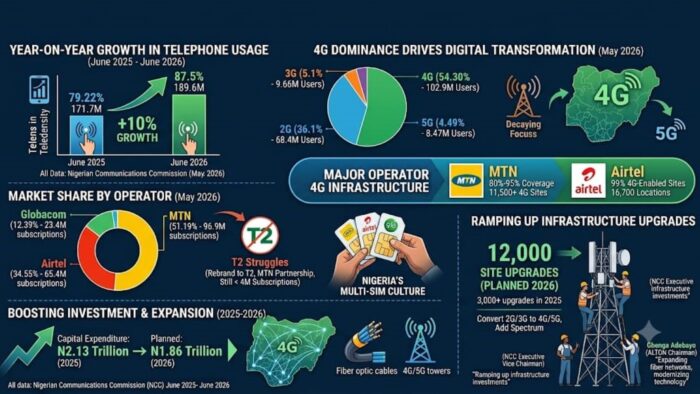
Despite its infrastructure ambitions, Nigeria’s 5G adoption rate remains at an early stage.
Industry forecasts indicate that 5G connections will account for about 15 per cent of Nigeria’s total mobile connections by the end of 2026, trailing markets such as Morocco and Mauritius, where adoption rates are expected to be higher.
Coverage is also concentrated mainly in major urban centres, including Lagos and Abuja, while many rural communities continue to depend on older 2G and 3G networks.
Industry stakeholders say expanding coverage beyond major cities, improving affordability of compatible devices and strengthening digital infrastructure will be critical to unlocking the full value of 5G.
Beyond Faster Internet Speeds
Nigeria’s 5G strategy extends beyond consumer broadband services, with policymakers and operators looking toward industrial applications that could transform key sectors of the economy.
Potential use cases include automation in oil and gas, mining, logistics, manufacturing and smart city development.
The planned introduction of 26GHz spectrum is expected to support private networks and advanced industrial solutions, aligning with Nigeria’s broader digital economy objectives.
Fixed Wireless Access Emerges as Growth Driver
Across Africa, fixed wireless access (FWA) has become one of the strongest opportunities for monetising 5G networks.
About 40 African networks currently offer FWA services, providing wireless broadband connections to homes and businesses. The segment is expected to grow from fewer than one million connections currently to about 3.5 million by 2030.
Lower equipment costs are also supporting adoption. Prices of customer-premises equipment have declined significantly, making wireless broadband solutions more accessible for households and businesses.
Nigeria’s Role in Africa’s Digital Future
As Africa prepares for a major expansion in 5G connectivity, Nigeria’s large population, growing digital economy and expanding technology ecosystem place it among the countries expected to shape the continent’s next phase of connectivity.
However, achieving leadership in the 5G era will depend on more than spectrum allocation. Investments in fibre infrastructure, affordable devices, reliable electricity supply, cybersecurity and wider network coverage will determine how effectively businesses and citizens benefit from the technology.
With the global economy increasingly driven by artificial intelligence, automation and digital services, the expansion of 5G infrastructure could become a key foundation for Nigeria’s ambitions to remain competitive in Africa’s emerging digital economy.