







.
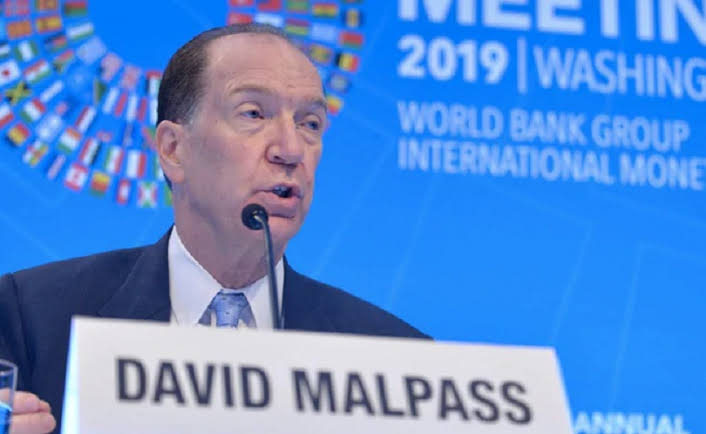
Former World Bank President David Malpass has cautioned Nigeria against increasing reliance on opaque, collateral-backed borrowing arrangements, warning that such financing structures could complicate future debt restructuring efforts and weaken investor confidence if the country’s debt profile becomes unsustainable.
Malpass made the remarks in a World Bank Policy Research Working Paper titled Public Debt and Central Banks, based on the Stanley Fischer Memorial Lecture delivered during the World Bank Group’s Annual Bank Conference on Development Economics. The paper examines evolving sovereign debt practices and the growing complexity of public borrowing in emerging economies.
Concerns Over Collateral-Backed Borrowing
In the report, Malpass observed that collateralised sovereign borrowing has become increasingly common among developing nations, including Nigeria, Angola, and Senegal, with many of the transactions lacking sufficient transparency.
He argued that these financing arrangements create what he described as “a race toward seniority” among creditors, giving some lenders priority over others in the event of financial distress. According to him, such structures could make future debt restructuring negotiations significantly more difficult and increase uncertainty for investors.
Malpass also questioned the growing use of guarantee products provided by multilateral development banks, saying their effectiveness has not been adequately tested during sovereign debt restructuring scenarios.
Transparency Remains a Major Challenge
The former World Bank chief expressed broader concerns about the global sovereign debt landscape, noting that limited disclosure continues to hinder efforts to accurately assess debt obligations in many developing countries.
He said debt experts are often forced to work with incomplete information because some sovereign borrowing arrangements including certain commercial loans and lending programmes involving Chinese creditors contain confidentiality clauses that obscure their full terms.
According to Malpass, greater transparency is essential to improving debt sustainability and ensuring that borrowing arrangements genuinely serve the interests of developing economies.
Currency Reforms Could Unlock Growth
Beyond debt management, Malpass identified exchange rate reforms as one of the most significant opportunities for Nigeria’s economic transformation.
He argued that stable and market-driven exchange rate systems are critical for sustainable economic growth, suggesting that previous exchange rate distortions in countries such as Nigeria, Egypt, and Ethiopia disproportionately benefited privileged groups while reducing purchasing power for ordinary citizens and worsening poverty.
Malpass estimated Nigeria’s per capita income at roughly $1,500 annually, noting that many Nigerians working abroad earn significantly higher incomes. He maintained that comprehensive currency reforms could substantially improve productivity, investment, and living standards.
Broader Reform Agenda
Reflecting on his tenure at the World Bank, Malpass disclosed that he held several discussions with Nigeria’s former administration and World Bank officials on reforms capable of accelerating economic growth.
According to him, priorities identified during those engagements included exchange rate unification, oil sector reforms, tax policy improvements, and agricultural liberalisation particularly in rice production. He argued that implementing such reforms could have a transformative impact on Nigeria’s economy, comparable to the growth momentum generated by China’s economic reforms in the 1990s.
IMF, Fitch Raise Similar Concerns
Malpass’ warning comes amid growing scrutiny of Nigeria’s external borrowing strategy.
Earlier this year, the International Monetary Fund (IMF) cautioned the Federal Government over its proposed $5 billion Total Return Swap (TRS) financing arrangement with First Abu Dhabi Bank (FAB), describing such derivative-based financing structures as complex and lacking sufficient transparency.
Similarly, Fitch Ratings warned that the transaction could obscure Nigeria’s sovereign debt exposure and complicate any future debt restructuring process. Despite the concerns, the Federal Government has already drawn approximately $1.5 billion under the financing arrangement as part of its strategy to refinance expensive debt and bridge budget financing needs.
Growing Focus on Debt Sustainability
The latest comments add to the ongoing debate over Nigeria’s borrowing strategy as the government seeks alternative financing options to support infrastructure development and manage fiscal pressures.
While authorities maintain that innovative financing mechanisms are necessary to address funding gaps, economists and international financial institutions continue to stress that transparency, prudent debt management, and comprehensive economic reforms remain critical to safeguarding long-term fiscal sustainability and maintaining investor confidence.