







.
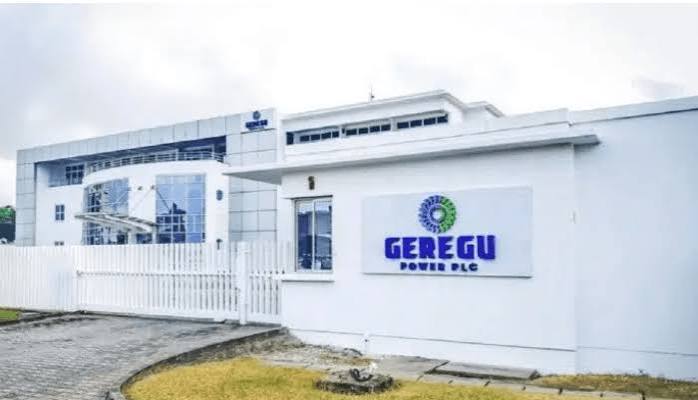
Geregu Power Plc has defaulted on payments linked to its ₦40.09 billion Series 1 Senior Unsecured Bond, raising fresh concerns about the power company’s liquidity and ability to meet its debt obligations.
The default, disclosed in an updated listing status by FMDQ Securities Exchange, involves both the bond’s eighth semi-annual coupon payment and its scheduled fourth principal bullet repayment.
The development comes as Geregu Power grapples with a sharp deterioration in revenue and profitability following a major turbine maintenance programme that has significantly reduced its available generating capacity.
₦40.09bn Bond Enters Credit Default
The affected instrument is a seven-year bond issued on July 28, 2022, under Geregu Power’s ₦100 billion debt issuance programme.
The bond carries a fixed annual coupon rate of 14.50% and was structured to make interest payments twice a year alongside scheduled repayments of principal before its final maturity on July 28, 2029.
FMDQ has now classified the instrument as being in credit default following the missed eighth coupon payment and fourth bullet principal repayment.
The timing is significant because the company has encountered payment difficulties before reaching the final stage of the bond’s life, intensifying questions about its near-term cash position.
Revenue Plunges 79% in H1 2026
Geregu’s debt-servicing difficulties coincide with a sharp decline in its operating performance.
For the six months ended June 30, 2026, the company recorded ₦18.65 billion in revenue, representing a 78.71% decline from the ₦87.63 billion generated in the corresponding period of 2025.
Profit after tax also fell by 88% to ₦2.54 billion, compared with ₦20.27 billion a year earlier.
The deterioration became even more pronounced in the second quarter, when revenue fell to just ₦419.1 million, compared with ₦55.87 billion in Q2 2025.
The latest figures contrast sharply with the company’s earlier expectations for 2026. Geregu had initially projected first-quarter revenue of ₦57.11 billion and profit after tax of ₦12.02 billion, compared with ₦31.75 billion and ₦10.43 billion respectively in Q1 2025.
Turbine Maintenance Hits Cash Flow
Geregu Power has linked the sharp operational slowdown to a planned ₦61.47 billion major turbine maintenance programme.
The overhaul is intended to improve the long-term reliability and capacity of the power plant. However, the temporary reduction in generating capacity has also cut the company’s billable electricity output, placing considerable pressure on revenue and operating cash flows.
The resulting cash-flow constraints have emerged at the same time the company is required to meet scheduled obligations to bondholders.
Balance Sheet Offers Some Cushion
Despite the pressure on earnings and debt servicing, Geregu retains some balance-sheet support.
The company recorded ₦16.12 billion in reversals of financial asset impairment, providing a partial boost to its financial position during the period.
Total liabilities also declined to ₦239.33 billion, indicating some reduction in the company’s overall liability position even as its ability to meet immediate debt obligations has come under pressure.
However, the missed bond payments suggest that reported balance-sheet strength has not eliminated short-term liquidity challenges.
GCR Maintains Stable Credit Outlook
The default comes despite a relatively positive assessment from GCR Ratings, which recently affirmed Geregu Power’s national-scale long-term issuer rating at ‘A(NG)’ with a Stable outlook.
The rating agency expects the company’s financial performance to recover once the turbine maintenance work is completed and the plant returns to higher available generation capacity.
The expectation is that improved power output would translate into stronger revenue and cash generation, helping the company restore its debt-servicing capacity.
Investors Watch Power Sector Risks
Geregu’s bond default highlights the financial pressures facing electricity generation companies operating within Nigeria’s electricity value chain.
Power producers continue to contend with challenges around payment collections, operating costs, available generation capacity and long-standing financial imbalances across the sector.
For investors, Geregu’s ability to complete its turbine overhaul, restore generation and rebuild operating cash flow will now be critical to determining whether the current debt-service difficulties remain temporary or develop into a broader financial problem.
The company’s next steps on the missed bond obligations, alongside the pace of its operational recovery, are therefore likely to remain closely watched by investors and creditors.