








.
Africa may not need to begin its artificial intelligence journey by developing the world’s most powerful AI models, with experts arguing that the continent’s bigger opportunity lies in adapting existing technology to local needs and building the infrastructure around it.
The argument comes as the cost of accessing capable AI models continues to fall, potentially reducing one of the biggest barriers that previously limited African businesses from experimenting with advanced AI.
Mustafa Ehsan, founder of AI research firm Convly, said that the economics of AI have changed significantly. His research tracks the pricing and performance of 33 AI models and shows how dramatically the cost of running AI workloads has declined.
According to Ehsan, a workload that could cost a Nigerian startup about $1,750 monthly using a premium US model can now be handled for approximately $21 using one of the least expensive capable alternatives.
Cost of AI Access Is Falling
The sharp reduction in model costs is changing the central question for African businesses.
Rather than focusing primarily on whether companies can access advanced AI, Ehsan believes the more important issue is whether they can deploy the technology effectively within their own businesses and markets.
His view is that model intelligence is no longer the principal limitation for a company with sufficient resources to experiment with AI.
That creates an opportunity for African businesses to concentrate on applications, data, infrastructure and services built around existing models rather than attempting immediately to compete with the world’s largest AI laboratories.
Local Context Could Be Africa’s Advantage
For Jephte Ioudom, founder of FoubsLabs, the key challenge is ensuring that AI systems understand African realities.
Ioudom’s perspective was shaped partly by his work on an AI mathematics tutoring platform developed for pre-service mathematics teachers in the Republic of Benin as part of a World Bank Group study examining AI’s potential impact on education.
The project was designed around African teachers and classrooms rather than simply importing a system developed elsewhere.
According to Ioudom, AI models need greater context about African environments, languages and institutions if they are to become genuinely useful to local users.
Data Could Become a Strategic Asset
The Benin education project also highlighted another opportunity: the data generated when African users interact with AI systems.
Teachers using the platform produced information that could help researchers and developers understand user behaviour, identify new applications and improve AI products.
For Ioudom, the question is therefore not simply whether Africans can use AI, but who owns and controls the data and knowledge generated as the technology is adopted.
That could become strategically important as AI adoption expands across education, finance, healthcare, agriculture and other sectors.
Build Around AI, Not Just the Models
The perspectives from Ehsan and Ioudom point towards a broader strategy for Africa.
Instead of immediately trying to reproduce the enormous computing infrastructure and capital requirements behind frontier models, African countries and companies could focus on building the layers that make AI useful locally.
These include high-quality local datasets, specialised applications, AI talent, cloud and data infrastructure, connectivity and systems capable of adapting global models to African languages and business environments.
The approach would allow African developers to benefit from advances made by global AI companies while developing capabilities that are specifically suited to local markets.
Infrastructure and Skills Still Matter
The strategy does not mean Africa can simply rely on foreign AI technology indefinitely.
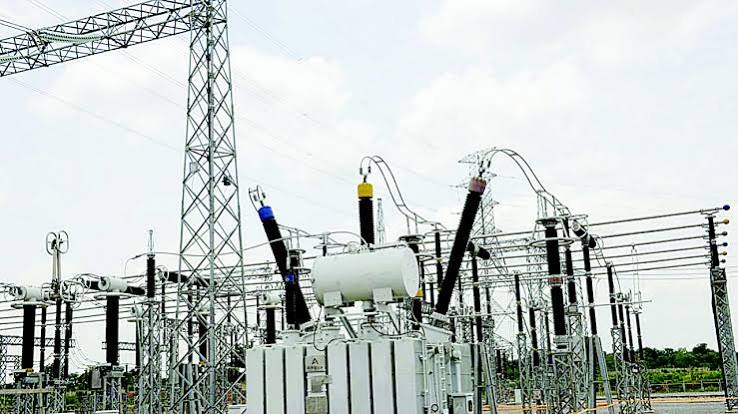
The continent will still need reliable electricity, affordable internet access, computing infrastructure, digital skills and appropriate regulatory frameworks to make widespread AI adoption possible.
The International Monetary Fund has similarly argued that African economies do not necessarily need to build the world’s most powerful AI models, but must develop the capacity to adopt, adapt and scale AI quickly.
This means investment in the foundations of the digital economy could prove just as important as investment in model development.
From AI Consumers to AI Builders
Africa’s long-term objective, therefore, may not be to become another Silicon Valley overnight.
The more immediate opportunity could be to become highly effective at taking increasingly accessible AI technology and applying it to problems that are specific to African economies.
That could mean developing AI systems for local education, financial services, healthcare, agriculture, logistics and government services, while ensuring that African data and expertise remain part of the value chain.
The emerging argument is not that Africa should never build frontier AI models. Rather, experts believe the continent can pursue a more practical sequence: use existing models, adapt them to local conditions, build the surrounding infrastructure and capabilities, and progressively develop more advanced technologies of its own.
For Africa, the AI race may therefore be less about building the biggest model first and more about determining who can turn the technology into the greatest economic and social value.