






.
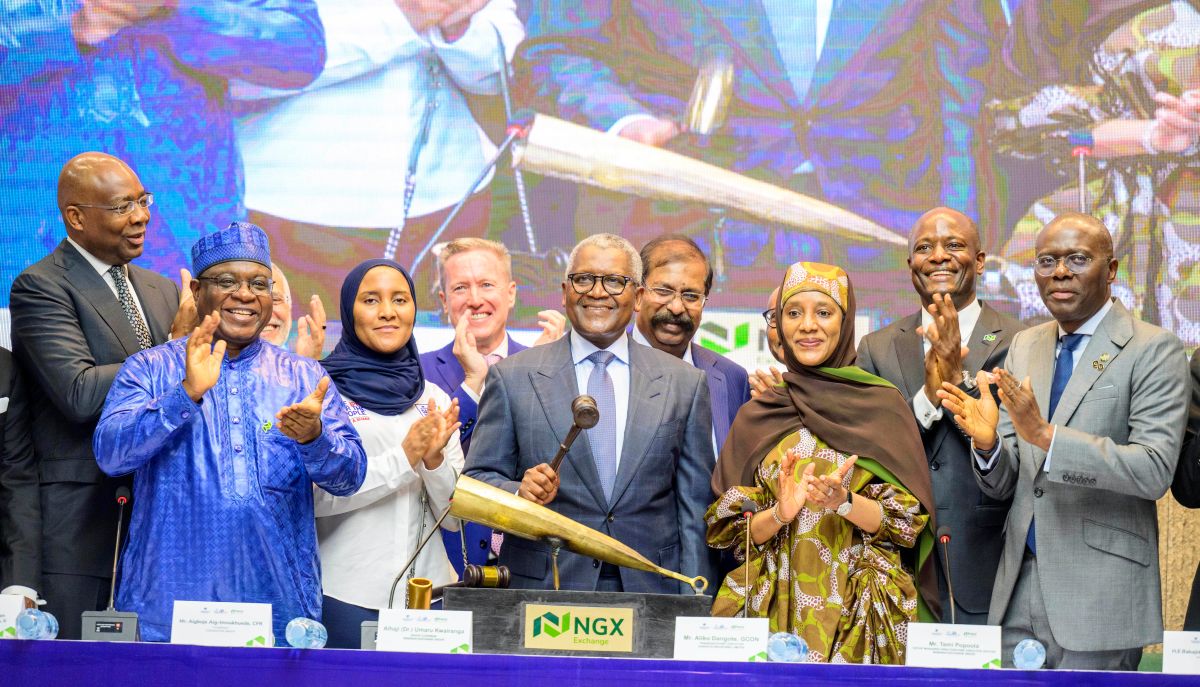
Aliko Dangote, President of Dangote Industries Limited, has positioned the landmark public offering of the Dangote Petroleum Refinery and Petrochemicals as more than a capital-raising exercise, saying the deal could create long-term wealth for millions of investors and broaden participation in Nigeria’s capital market.
The comments came as the refinery opened its ₦2.15 trillion Initial Public Offering (IPO), described as Africa’s largest, offering ordinary investors an opportunity to take equity in one of the continent’s biggest industrial projects.
The offer comprises 4.1 billion ordinary shares at ₦525 per share, with subscriptions running from September 14 to October 13, 2026. Investors can subscribe for as few as 10 shares, putting the minimum entry value at ₦5,250.
Dangote has described the transaction as an effort to “democratise wealth creation”, arguing that public ownership can allow Nigerians and other investors to participate directly in the refinery’s future growth.
Dangote Bets on Long-Term Wealth Creation
Speaking around the launch of the offer, Dangote presented the IPO as an opportunity for investors to participate in the expansion of a business with ambitions that extend well beyond its current operations.
The billionaire businessman has also suggested that the refinery’s shares could appreciate significantly over time, with reports quoting him as projecting a potential increase from the ₦525 offer price to as much as ₦10,000.
That projection represents a substantial potential increase, although it remains a forward-looking expectation rather than a guaranteed investment return.
The distinction is important for investors, particularly because the eventual market value of the shares will depend on the refinery’s financial performance, market conditions, investor demand and broader economic developments.
Africa’s Biggest IPO Opens to Retail Investors
The scale of the offering is unprecedented for the African capital market.
Dangote Refinery is seeking approximately ₦2.15 trillion, equivalent to about $1.6 billion, through the sale of the 4.1 billion shares.
The refinery has been valued at approximately ₦63 trillion ($47.6 billion) under the IPO structure, making it one of the largest corporate assets ever brought to Nigeria’s public market.
The transaction is deliberately structured to accommodate smaller investors.
With a minimum subscription of just 10 shares, retail investors do not need to commit millions of naira to gain exposure to the company. The approach is expected to widen participation beyond institutional investors and wealthy individuals.
The IPO has already generated substantial interest among retail investors, with digital investment platforms experiencing heightened traffic as individuals seek access to the offer.
Refinery Targets 1.4 Million Barrels Per Day
The investment proposition is closely tied to Dangote Refinery’s expansion ambitions.
The facility currently operates at approximately 700,000 barrels per day, with the company planning to increase capacity to 1.4 million barrels per day over the coming years.
The additional capacity would strengthen the refinery’s position in the global refining market while supporting Dangote’s ambition to build a broader energy and industrial business.
The company also plans to deploy capital towards additional projects, including expansion of its petrochemical operations.
For investors, the expansion strategy is central to the long-term growth argument surrounding the IPO because increased production capacity could potentially translate into higher revenues and earnings if market conditions remain favourable.
Strong Financial Performance Strengthens IPO Pitch
The refinery enters the public market after a major improvement in its financial performance.
According to details released around the IPO, Dangote Refinery recorded $1.82 billion in net profit in the first half of 2026, compared with a loss of approximately $476 million in the corresponding period of the previous year.
Revenue exceeded $13 billion during the period, highlighting the scale of the operation now that the refinery is running at full capacity.
The financial turnaround provides a stronger foundation for the public offering, although investors will still need to assess the refinery’s future earnings against its valuation and the capital requirements of its expansion programme.
IPO Could Transform Nigeria’s Capital Market
Beyond Dangote Refinery itself, the offering could have a wider impact on Nigeria’s investment landscape.
The transaction is expected to bring a new generation of retail investors into the stock market, particularly younger Nigerians and first-time investors attracted by the opportunity to own part of a globally significant African business.
The offer’s relatively low minimum subscription is designed to support this broader participation.
If successful, the IPO could demonstrate that large-scale Nigerian companies can raise substantial capital from a combination of institutional and retail investors while creating a deeper domestic ownership base.
It could also encourage other major private companies to consider public listings as an alternative source of long-term capital.
Investors Face Both Opportunity and Risk
Despite Dangote’s optimism about the wealth-creation potential, the IPO does not eliminate investment risk.
The refinery operates in a highly cyclical global energy market, where crude-oil prices, refining margins, foreign-exchange movements, geopolitical developments and changes in fuel demand can influence profitability.
Its expansion programme will also require substantial capital, while investors will ultimately judge the company based on its ability to translate its enormous production capacity into sustainable earnings and shareholder returns.
The ₦525 offer price therefore represents an entry point, not a promise that the shares will rise.
A Landmark Test for Nigeria’s Market
The Dangote Refinery IPO represents a major test of Nigeria’s ability to mobilise domestic capital around large-scale industrial assets.
For Dangote, the objective extends beyond raising funds. The company is seeking to create a broader shareholder base while securing capital to expand an energy business that could become significantly larger over the next several years.
For investors, meanwhile, the offer represents an opportunity to participate in the next stage of the refinery’s development but one that still requires careful consideration of valuation, business performance and market risks.
With the offer open until October 13 and trading expected to begin later in November, attention will now shift from the excitement surrounding Africa’s biggest IPO to the harder question of whether the refinery can deliver the long-term earnings growth required to turn Dangote’s promise of generational wealth into lasting shareholder value.