







.
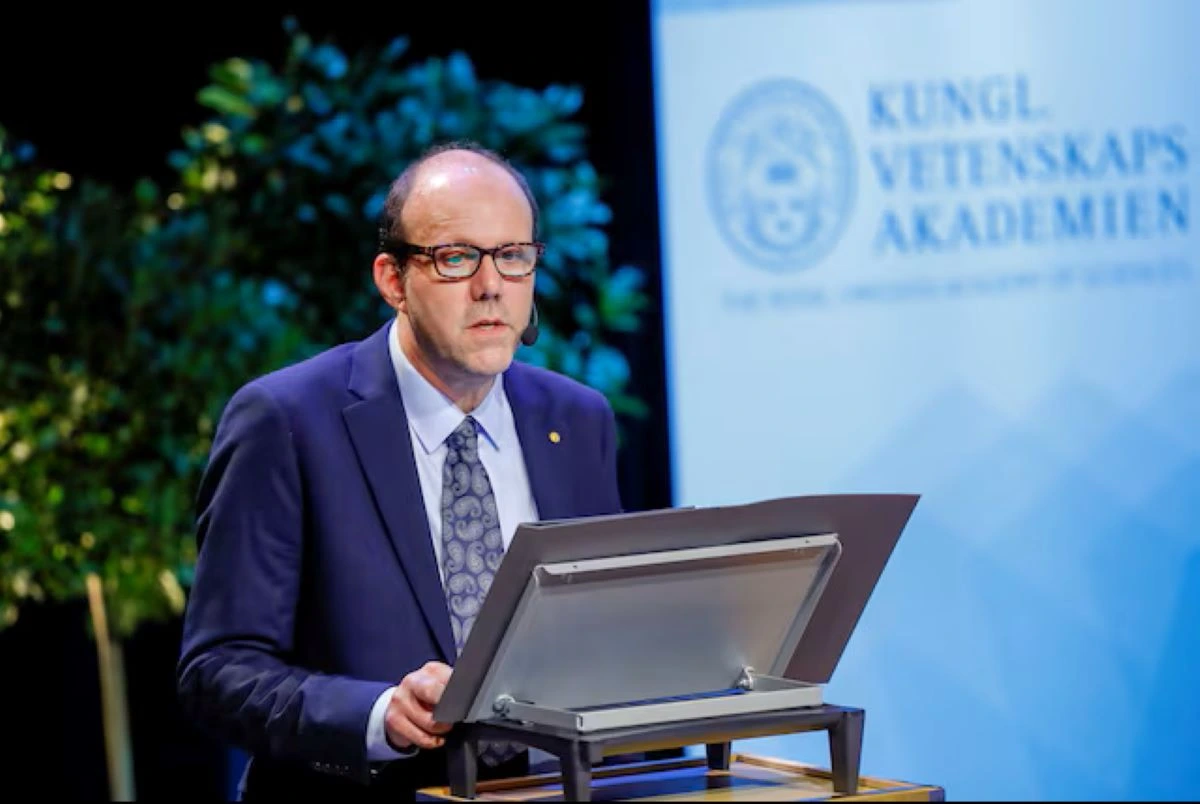
The World Bank Group has appointed Nobel Prize-winning economist Michael Kremer as its new Chief Economist and Senior Vice President for Development Economics, bringing a prominent development economist into the institution’s senior leadership as it seeks stronger links between research, technology and practical development solutions.
World Bank Group President Ajay Banga announced the appointment on Wednesday, September 16, 2026, with Kremer scheduled to assume the position on October 1, 2026. He will succeed Indermit Gill, who served as chief economist from September 2022 before leaving the institution in late August.
Nobel Laureate Joins World Bank Leadership
Kremer becomes the first economist to join the World Bank as chief economist while already holding a Nobel Prize. Previous World Bank chief economists including Joseph Stiglitz and Paul Romer received the Nobel Prize after serving in the role.
He was jointly awarded the 2019 Nobel Prize in Economic Sciences with Abhijit Banerjee and Esther Duflo for their experimental approach to addressing global poverty.
The research associated with the three economists helped establish the use of rigorous field experiments and randomised controlled trials to identify development interventions that can be tested, measured and scaled.
Kremer currently serves as a University Professor at the University of Chicago and directs its Development Innovation Lab. He previously taught at Harvard University and holds a PhD in economics from Harvard.
Research, Data and Technology at the Centre
At the World Bank, Kremer will lead the institution’s research, data and analytical agenda, areas that have become increasingly important as development institutions confront complex economic, technological and social challenges.
His research has covered economic growth, technological change and development, with work spanning education, healthcare, water, finance and agriculture in developing economies.
The World Bank said his work has helped translate research into programmes reaching large populations, including initiatives involving vaccines, school health and support for smallholder farmers.
Banga said Kremer’s experience of moving development ideas from research into large-scale programmes was particularly relevant to the institution’s current priorities.
“Michael has spent his career not just identifying what works in development, but proving it at scale,” Banga said, describing that approach as the kind of thinking the World Bank needs.
Jobs, Private Capital and Development Under Pressure
Kremer takes over at a period when developing economies are dealing with pressure from higher financing and energy costs, alongside weaker development assistance.
The World Bank said the global development agenda faces major challenges, including creating employment opportunities for the large number of young people entering the workforce.
Banga specifically pointed to the more than 1.2 billion young people expected to reach working age over the coming decade, highlighting job creation as a major development priority.
The appointment also comes as development institutions increasingly look towards private capital, innovation and technology to complement traditional public financing.
Reuters reported that official development assistance fell sharply in 2025, while developing countries continue to face higher borrowing and energy costs.
Kremer Brings Technology-Focused Development Record
Kremer has previously argued for greater support for innovative pilot programmes and research into technologies capable of improving development outcomes.
In a 2024 World Bank speech, he called for reforms that would help countries achieve ambitious development objectives, including greater support for experimentation and technological research.
His previous work includes research into school-based deworming programmes, vaccine development and agricultural productivity. He has also worked on AI-based agricultural weather forecasting and co-founded Precision Development, an organisation using digital technologies to provide information intended to improve productivity and incomes among smallholder farmers.
His work on Advance Market Commitments also helped create a mechanism through which donor commitments could encourage pharmaceutical companies to develop products for lower-income countries.
A Broader Role for Evidence in Policy
Kremer said the World Bank has substantial capacity to research and test solutions before using its operational reach to expand successful approaches.
“The World Bank Group has tremendous research capacity to develop and test innovative solutions to development problems—and the operational reach to scale them up,” Kremer said.
He also highlighted the potential of new technologies to support economic growth and improve human welfare, while pointing to the need for reliable data and evidence to help governments and businesses navigate emerging opportunities and challenges.
His appointment therefore places an economist with a strong experimental and technology-oriented research background at the centre of the World Bank’s development economics function.
What the Appointment Means for Developing Economies
Beyond the leadership change, Kremer’s arrival signals the World Bank’s continued emphasis on connecting research, evidence, innovation and implementation.
For developing economies, where governments face competing demands around employment, healthcare, education, agriculture and infrastructure, the ability to identify interventions that work and scale them efficiently remains a central policy challenge.
Kremer’s October 1 start will also come shortly before the annual meetings of the World Bank and International Monetary Fund in Bangkok, placing his transition into the role alongside a major gathering of global economic policymakers.
As Chief Economist, his work will consequently extend beyond academic research to informing the World Bank’s economic analysis, development policy and approach to scaling solutions across countries and sectors.