









.
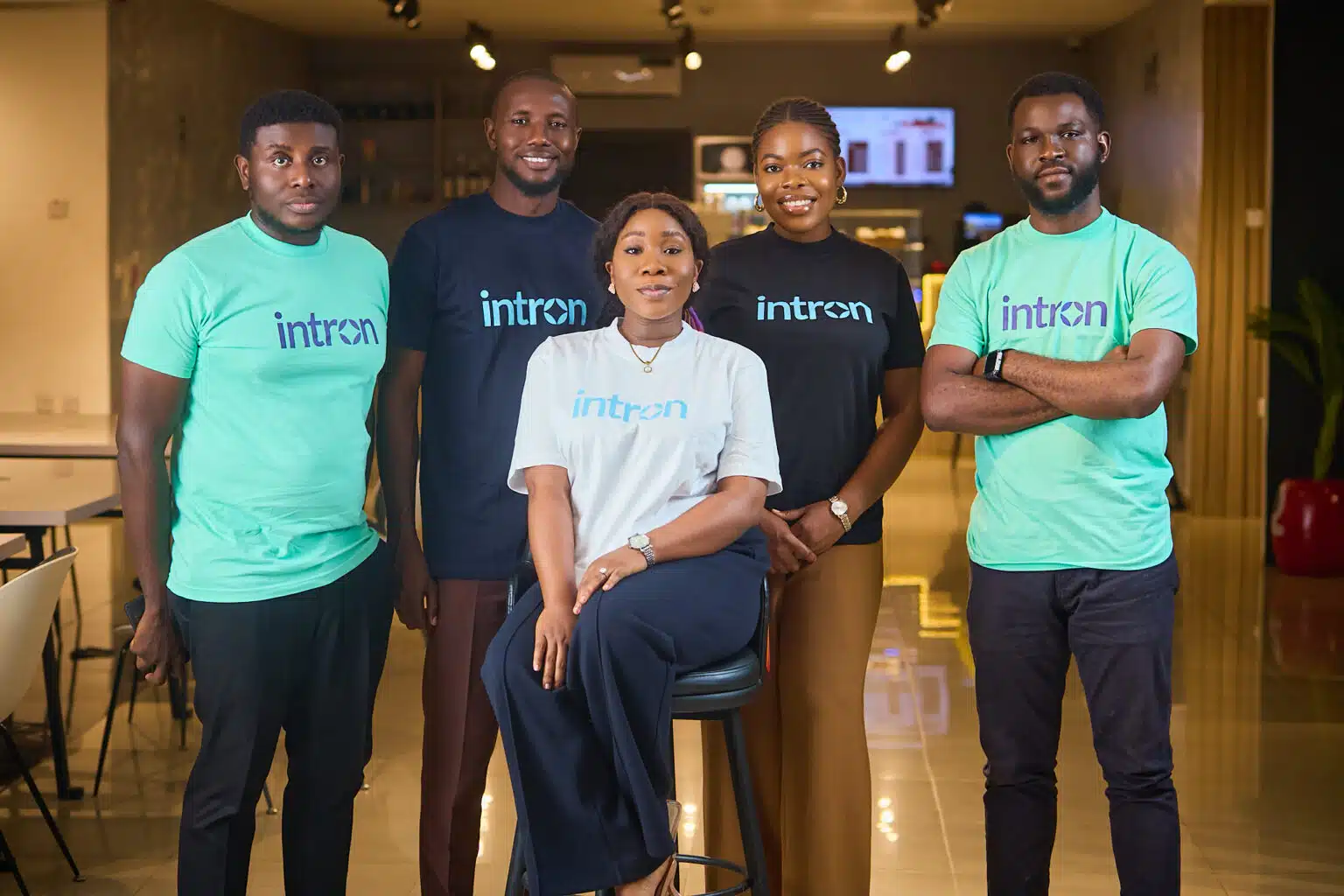
Nigerian artificial intelligence startup Intron AI has launched Sahara v2.5, an upgraded voice AI model designed to better understand and respond to conversations that switch between English and African languages.
The latest version expands Intron’s code-switching capabilities across about 20 African languages, addressing a common feature of everyday communication on the continent where speakers frequently move between English and local languages within the same conversation.
The company has also introduced improved voice-generation capabilities, allowing the system to respond in African languages and switch languages while speaking.
Addressing Africa’s Multilingual Reality
Intron’s Chief Executive Officer, Tobi Olatunji, said the upgrade was driven largely by feedback from customers using earlier versions of the company’s technology.
The previous Sahara model had experimented with code-switching but was largely limited to conversations involving English and Swahili. Real-world deployments exposed the limitations of that approach.
In settings such as hospitals, courts and call centres, people may begin speaking in English before switching to a local language to explain something more naturally. According to Intron, these switches can contain important information that conventional voice AI systems may fail to capture.
Sahara v2.5 is designed to follow those transitions rather than treating them as interruptions or recognition errors.
Voice AI Expands Beyond Transcription
The new model is not limited to converting speech into text.
Intron says Sahara v2.5 can also generate speech in African languages, including Igbo and Hausa, while handling mixed-language conversations.
The development could broaden the use of voice interfaces across customer service, public information, government services and other areas where users may prefer speaking to navigating applications or typing.
The company’s approach reflects a wider push across Africa to develop AI systems that understand local languages, accents and communication patterns rather than forcing users to adapt to systems designed primarily around high-resource languages.
Hospital Deployment Shows Practical Use
One of the early applications of the upgraded technology is at Meridian Hospital in Enugu, where doctors and patients commonly communicate in Igbo.
Intron had previously provided the hospital with an English-language model for medical dictation. With the newer technology, the company aims to capture conversations themselves and generate clinical notes that doctors can review and edit.
The approach could reduce the amount of time medical professionals spend manually documenting consultations, particularly in busy facilities where doctors see large numbers of patients.
Intron sees similar potential in sectors including agriculture and creative industries, where natural voice interaction could make AI tools more accessible to users who may not primarily communicate in English.
API Strategy Targets Multiple Industries
Although Intron’s technology is being used across healthcare, legal services, government and call centres, the company says it does not intend to build a separate product for every industry.
Instead, it is increasingly pursuing an API-first strategy, allowing other businesses to integrate its speech and voice capabilities into their own applications.
The underlying technology can convert voice to text and generate speech, while customers determine how those capabilities are incorporated into their products.
Intron is also exploring applications in financial services, including voice banking, where customers could interact with financial services through spoken commands rather than navigating multiple app screens.
Building AI Around African Speech
Developing voice AI for African markets requires more than simply training a model on conventional datasets.
Intron combines human-generated training data with a proprietary synthetic-data system designed to create additional targeted datasets.
The company says this approach allows it to expand training material while reducing reliance on the slower and more expensive process of collecting every example from human speakers.
It has also filed a US patent application relating to its data-generation technology.
However, scaling voice AI remains expensive because high-quality, low-latency systems require substantial computing resources, including access to high-performance GPUs.
Data Privacy and Local Infrastructure
As voice AI moves into sensitive areas such as healthcare and financial services, data handling is another consideration.
Intron says it is working with a hospital in Port Harcourt on an offline deployment, allowing the AI system to operate without sending the data to a remote cloud environment.
For cloud deployments, the company also provides a zero-retention option, under which customer data and generated results are deleted rather than retained by the provider.
The issue is becoming increasingly relevant as African countries seek greater control over data generated within their borders, while many markets still face shortages of the computing infrastructure required to support advanced AI locally.
From Healthtech to AI Infrastructure
Intron’s expansion represents a significant evolution from its original focus on healthcare.
The company launched its Sahara speech-to-text technology in 2020 and initially concentrated on helping medical professionals reduce the burden of clinical documentation. Its technology has since expanded into other sectors as customers discovered applications beyond healthcare.
The startup raised $1.6 million in pre-seed funding in 2024, with plans to strengthen research, cloud infrastructure, on-premises capabilities and distribution.
Earlier work on the Sahara platform also involved datasets covering millions of audio clips and thousands of speakers across numerous countries, reflecting the company’s emphasis on African speech patterns and accents.
The Bigger Picture
Sahara v2.5 comes as African technology companies and major industry players increasingly invest in AI models capable of handling the continent’s linguistic diversity.
Africa has more than 2,000 languages, yet much of the world’s AI infrastructure remains heavily concentrated around English and other widely represented languages. Efforts to improve local-language AI could therefore determine how effectively large sections of the continent participate in the emerging AI economy.
For Intron, the opportunity goes beyond building a better transcription tool. Its strategy is to provide the underlying voice infrastructure that other companies can integrate into their own services.
If that model succeeds, improved multilingual voice AI could make digital services more accessible to users who have traditionally faced language barriers and potentially open new markets for AI across Africa.