


.
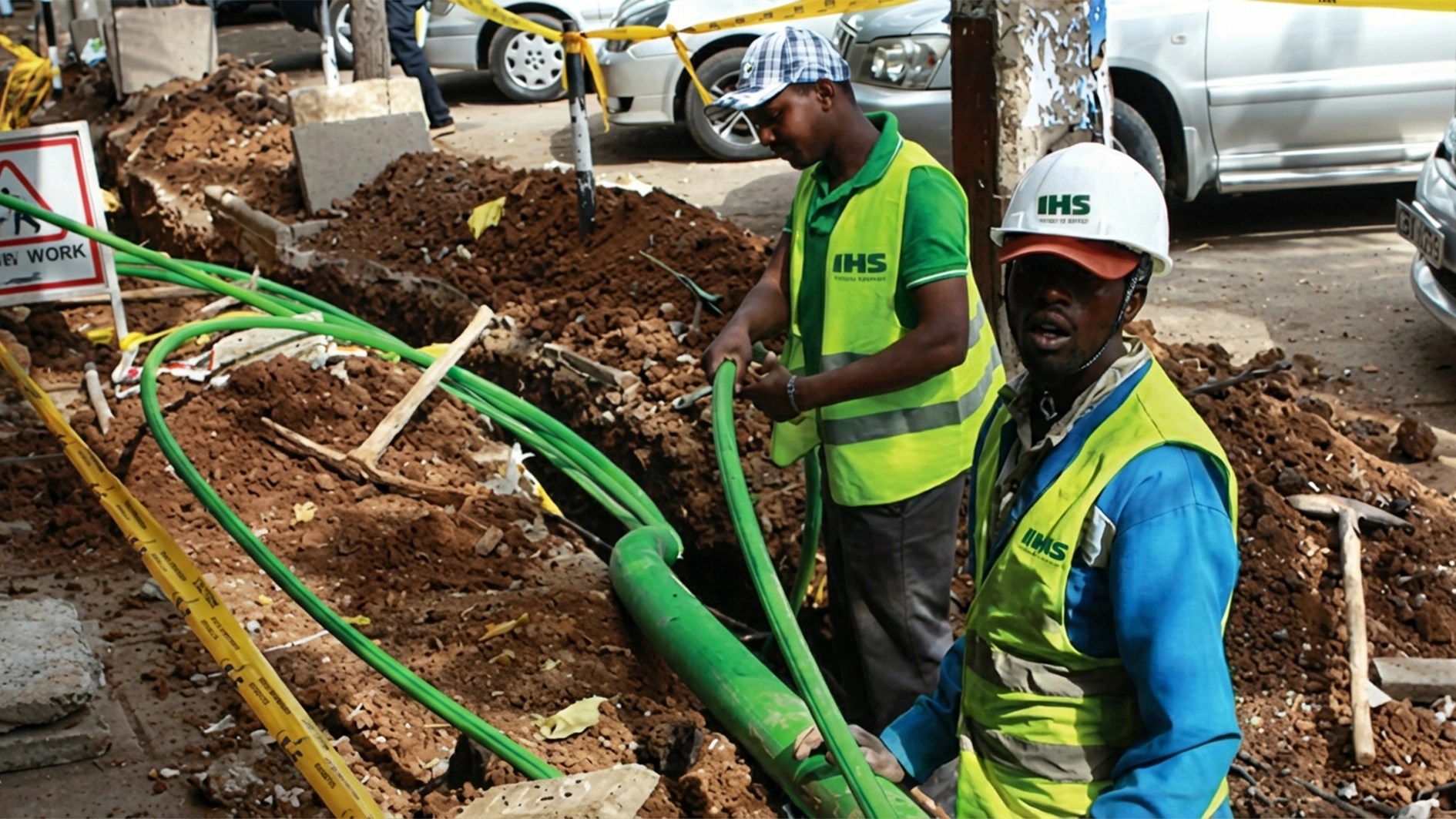
Several Nigerian states are continuing to impose substantial charges on telecommunications operators despite a Federal Government-backed effort to harmonise Right-of-Way (RoW) fees, raising concerns over the cost of broadband expansion and the pace of fibre deployment across the country.
An analysis of ease-of-doing-business data obtained from the Nigerian Communications Commission (NCC) shows that states have adopted widely different approaches to telecom infrastructure charges. While some have reduced RoW fees to the recommended N145 per linear metre, others continue to impose significantly higher rates or introduce additional application and processing fees.
N145 RoW Policy Faces Implementation Gaps
The National Economic Council (NEC) directed states in 2020 to adopt a uniform RoW charge of N145 per linear metre as part of efforts to accelerate broadband infrastructure deployment.
The policy was expected to lower the cost of laying fibre-optic cables and make it easier for operators to expand networks into underserved communities.
Six years later, however, implementation remains inconsistent, with operators facing different charges depending on the state in which they want to deploy infrastructure.
Application Fees Add to Operators’ Costs
Even states that have adopted the N145 benchmark are imposing additional charges.
Adamawa, for instance, has eliminated RoW charges but requires operators to pay N100,000 per application. Cross River applies the N145 rate but adds an application fee of N250,000.
In Ekiti, operators pay N145 per linear metre alongside a N700,000 application fee, the highest application charge identified in the analysis.
Taraba combines the N145 RoW charge with a N350,000 application fee, while Oyo charges N50,000 and Yobe N25,000 in application fees.
Even Gombe, which offers the N145 RoW rate, charges operators N10,000 per application.
Some States Continue to Charge Far Above Benchmark
Other states have maintained RoW rates substantially above the N145 benchmark.
Kano charges N2,754 per linear metre, while Delta imposes N2,706. Rivers charges N2,256, Akwa Ibom N2,000 and Osun N1,500.
The highest RoW charge identified is in Ogun State, where operators reportedly pay N6,600 per linear metre.
The disparities mean the cost of deploying the same fibre infrastructure can vary considerably depending on the location.
Industry Says ‘Hidden Charges’ Undermine Reforms
Telecom industry stakeholders argue that some states are effectively replacing formal RoW charges with other levies.
Gbenga Adebayo, Chairman of the Association of Licensed Telecom Operators of Nigeria (ALTON), said operators in some states face additional charges including development, education, environmental, effluent discharge and capital deployment levies, alongside application fees.
According to him, such costs can make the claim of zero or reduced RoW charges misleading because operators ultimately still face substantial expenses before infrastructure can be deployed.
He also warned that prohibitively high charges and difficult engagement with some state authorities can make network expansion commercially unattractive.
Broadband Projects Face Delays
The additional costs are also affecting investment decisions, according to industry observers.
Former NITEL staff member Kehinde Aluko warned that expensive charges could result in fibre deployment projects being delayed or abandoned, particularly in states with the highest fees.
This could deepen the country’s existing digital divide, with urban areas continuing to receive greater infrastructure investment while some rural communities struggle to obtain affordable, reliable internet access.
Consumers Could Ultimately Bear the Cost
The impact extends beyond telecom operators.
Higher infrastructure deployment costs can eventually feed into the price consumers pay for connectivity. Industry observers also warn that expensive RoW and related charges could slow the expansion of 5G and fibre broadband, particularly outside major cities.
Slower infrastructure deployment could affect sectors increasingly dependent on reliable internet access, including education, healthcare and e-commerce.
The Bigger Picture
Nigeria’s broadband ambitions depend heavily on the rapid expansion of fibre infrastructure, but inconsistent charges across states remain a major obstacle.
The N145-per-metre policy was intended to create a more predictable and affordable environment for telecom infrastructure investment. The continued use of high RoW rates and additional charges, however, means operators still face significant barriers when expanding networks.
The challenge for policymakers is therefore not simply agreeing on a national benchmark, but ensuring that the policy is consistently implemented across states.
Until that happens, the cost of deploying fibre could continue to limit investment, slow connectivity expansion and ultimately make Nigeria’s ambition of broader, affordable broadband access more difficult to achieve.