







Today, let us put sentiments aside and x-ray Abia State’s unemployment crisis with facts, figures, and conscience. This is not an attack on personalities; it is a call to reason, responsibility, and results.
Abia Then: When Jobs Were Imperfect, but Opportunity Was Real
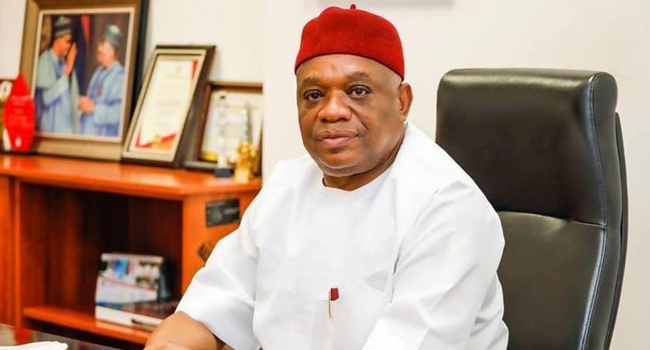
Historical labour survey data from the National Bureau of Statistics (NBS) covering the early 2000s reveal a telling pattern during the administration of Governor Orji Uzor Kalu (1999–2007):
- 2002: 14.8%
- 2003: 11.4%
- 2004: 9.7%
- 2005: 7.9%
- 2006: 13.5%
- 2007: 10.9%
These were state-level estimates from household and labour-force surveys, not political talking points. The trajectory matters: unemployment fell steadily, reaching a remarkable 7.9% in 2005, and remained largely within the 10–14% band during Kalu’s core years.
What does this mean? That Abia’s economy was working. Not perfect—but productive. Industries moved, markets thrived, and labour was absorbed. By any fair comparison, Abia’s labour-market performance then ranked among the best in the South-East.
Why Did Unemployment Fall Under Orji Uzor Kalu?
Because governance focused on production, not paperwork.
Kalu’s administration:
- Activated Aba’s industrial ecosystem instead of reducing it to rhetoric
- Built roads that opened markets, lowering transaction costs
- Encouraged local manufacturing, trading, and services
- Ensured public spending circulated within the state, creating multiplier effects
Abia Now: The Numbers That Hurt—but Must Be Faced
Fast-forward to today. According to the 2023 NBS Annual & Q1 2024 Nigeria Labour Force Survey:
Abia recorded the highest unemployment rate in Nigeria: 18.7% 📊 National average: 5.4%
Dig deeper:
- Over 1.51 million Abians are trapped in informal employment
- About 1.25 million are self-employed without stability or protection
- 38.1% of youths are NEET — Not in Employment, Education, or Training
The Enugu Contrast: Same Region, Different Choices
Next door, the story is different.
From NBS 2023 data:
- Enugu State unemployment rate: 5.9%
Below Abia. Near the national average. Same Nigeria. Same macro pressures.
So what’s the difference?
What Peter Mba Is Doing in Enugu
Governor Peter Mba governs with a clear economic logic:
You don’t reduce unemployment by speeches or savings alone—you reduce it by deliberately expanding productive capacity.
Enugu is:
- Aggressively courting private investment
- Linking infrastructure directly to job creation
- Running government as an economic accelerator, not just an accounting exercise
The result? Measurable employment outcomes.
Where Governor Alex Otti Is Falling Short
Let’s be honest—and compassionate.
- Fiscal discipline is good—but it does not create jobs by itself
- Rising IGR is commendable—but it does not employ youths automatically
- Clean books without industrial expansion lead to neat records and rising unemployment
The data is unequivocal:
- 7.9% unemployment at Kalu’s best
- 18.7% today—the highest in Nigeria
Conclusion: Facts Are Stubborn
By facts and figures:
- Unemployment was significantly lower under Orji Uzor Kalu
- Abia’s labour market performed better then than now
- At its peak, Abia ranked among the best in the entire South-East
- Today, Abia sadly leads the nation in unemployment
This is not nostalgia. It is evidence. Governance is not about how clean the books look; it is about how many people are working, earning, and living with dignity.
On unemployment, the verdict of data is clear: By facts and figures, the Orji Uzor Kalu administration performed far better than the current one—and in its time, it stood as the benchmark across the South-East.
Team OUK