


.
Nigeria’s telecommunications industry has recorded a significant increase in mobile phone usage, with the country’s telephone density rising by 10 per cent within one year, a growth largely attributed to the continued expansion of 4G network infrastructure across the country. The development underscores the growing demand for faster mobile internet services and improved connectivity as telecom operators intensify investments in broadband infrastructure.
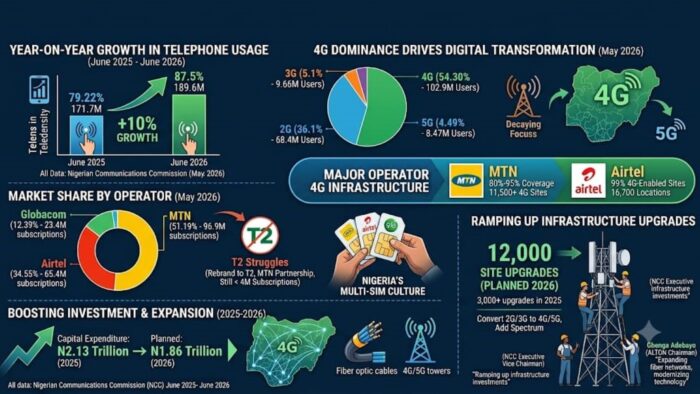
Data released by the Nigerian Communications Commission (NCC) shows that Nigeria’s teledensity a measure of active telephone connections per 100 inhabitants increased from 79.22 per cent, representing 171.7 million active telephone lines in June 2025, to 87.5 per cent, or 189.6 million active subscriptions, highlighting the sector’s continued expansion.
4G Becomes Nigeria’s Dominant Mobile Network
The report attributes much of the growth to the widespread adoption of 4G technology, which has become the backbone of Nigeria’s mobile communications ecosystem.
As of May 2026, 4G networks accounted for 54.3 per cent of mobile connections, translating to approximately 102.9 million subscribers. By comparison, 2G networks still served about 68.4 million users, while 3G subscriptions declined to 9.66 million as operators continue migrating customers to newer technologies.
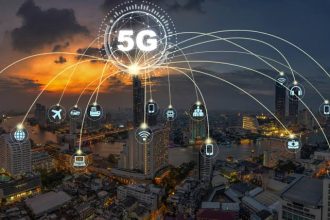
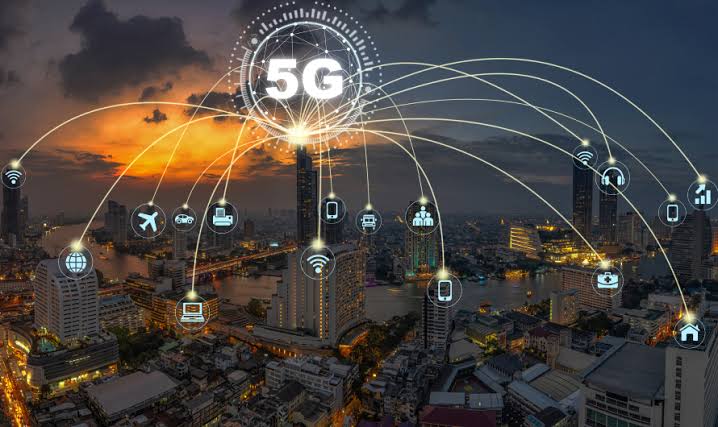
Meanwhile, 5G, now in its fourth year of commercial deployment in Nigeria, had reached 8.47 million subscribers, representing 4.49 per cent of the country’s mobile connections.
Broadband Adoption Reshaping Consumer Behaviour
The rapid expansion of 4G services has transformed how Nigerians access digital services, making high-speed internet more available for education, business, entertainment, financial services and social interaction.
Improved network quality and wider coverage have encouraged greater smartphone usage and increased reliance on mobile broadband, reinforcing Nigeria’s position as one of Africa’s largest telecommunications markets.
MTN Retains Market Leadership
The latest NCC subscriber statistics also show that MTN Nigeria remains the country’s largest mobile operator.
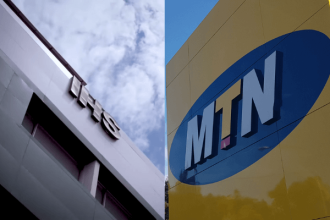
As of May 2026, MTN’s active subscriber base stood at 96.9 million, giving the operator 51.19 per cent market share and bringing it closer to the milestone of 100 million active subscriptions.
Airtel Nigeria maintained second place with 65.4 million active subscribers, accounting for 34.55 per cent of the market, while Globacom retained third position with 23.4 million subscribers, representing 12.39 per cent of total mobile connections.
T2, formerly known as 9mobile, remained the smallest operator with approximately 3.5 million subscribers, despite its rebranding and infrastructure-sharing agreement with MTN. The operator has continued to struggle to regain market share after previously serving more than 22 million subscribers.
Operators Increase Infrastructure Investment
The increase in telephone usage comes as telecom operators ramp up investments aimed at improving network quality and expanding coverage nationwide.
According to the NCC, operators have committed to upgrading approximately 12,000 network sites in 2026, a sharp increase from the just over 3,000 site upgrades completed in 2025.
The planned investments include deploying additional spectrum on existing 4G sites and upgrading legacy 2G and 3G infrastructure to support 4G and 5G services, improving both coverage and network capacity across the country.
Industry Investment Expected to Exceed N1.8 Trillion
The Association of Licensed Telecom Operators of Nigeria (ALTON) says the industry is preparing for another year of substantial capital expenditure.
According to ALTON Chairman Gbenga Adebayo, telecom operators invested about N2.13 trillion in infrastructure during 2025, with an additional N1.86 trillion earmarked for network expansion, fibre deployment, technology upgrades and improved service resilience in 2026.
He noted that the Federal Government’s approval of telecom tariff adjustments in 2025 helped restore financial sustainability to the sector, enabling operators to resume large-scale investments in network infrastructure.
Digital Transformation Gains Momentum
While Nigeria continues to experience growth in mobile connectivity, industry stakeholders note that many users maintain multiple SIM cards, meaning active subscriptions do not necessarily represent the number of unique mobile users.
Nevertheless, the steady expansion of 4G infrastructure, combined with increasing investment in 5G and broadband networks, is expected to further accelerate digital inclusion, support enterprise growth and strengthen Nigeria’s digital economy.
With operators committing billions of naira to modernising network infrastructure, the country’s telecommunications sector appears poised for another phase of growth as demand for high-speed connectivity continues to rise.