




.
Nigeria’s internet market is undergoing a major shift as fibre infrastructure expands across the country, delivering faster and more reliable connections to a growing number of users. But despite the progress, extending high-speed connectivity to more Nigerians remains the industry’s next major challenge.
The expansion of fibre networks is changing the quality of internet access available to Nigerian consumers and businesses, with faster connections increasingly becoming accessible beyond the country’s traditional urban hotspots. TechCabal’s report highlights the rapid transformation underway in Nigeria’s broadband market.
Fibre Changes the Broadband Equation
For years, mobile networks have carried much of Nigeria’s internet traffic, particularly because they can reach locations where fixed broadband infrastructure is limited.
Fibre, however, offers a different proposition. Its high capacity and ability to provide stable connections make it particularly important for activities that require consistent, high-speed internet, including cloud computing, video streaming, remote work and digital business operations.
The expansion of fibre infrastructure is consequently helping to raise the quality of Nigeria’s overall internet experience.
More Users Are Moving to Faster Connections
The country’s fibre growth is also contributing to an increase in the number of Nigerians accessing faster broadband services.
As operators extend their networks and more homes and businesses become connected, fixed broadband is becoming a more meaningful part of Nigeria’s internet ecosystem.
That shift could have wider implications for the digital economy, particularly for businesses whose operations depend on reliable connectivity.
For startups, financial technology companies, content creators and other digital businesses, dependable broadband can reduce some of the limitations created by unstable or inadequate internet access.
The Urban-Rural Divide Remains
Despite the progress, fibre expansion has not eliminated Nigeria’s connectivity gap.
Building fibre infrastructure is considerably more difficult in areas where population density is low or where the cost of deploying and maintaining network infrastructure is difficult to justify commercially.
This creates a familiar problem: the locations with the greatest concentration of potential customers are often easier and more attractive for operators to serve, while sparsely populated communities can remain underserved.
Infrastructure Deployment Is Only One Challenge
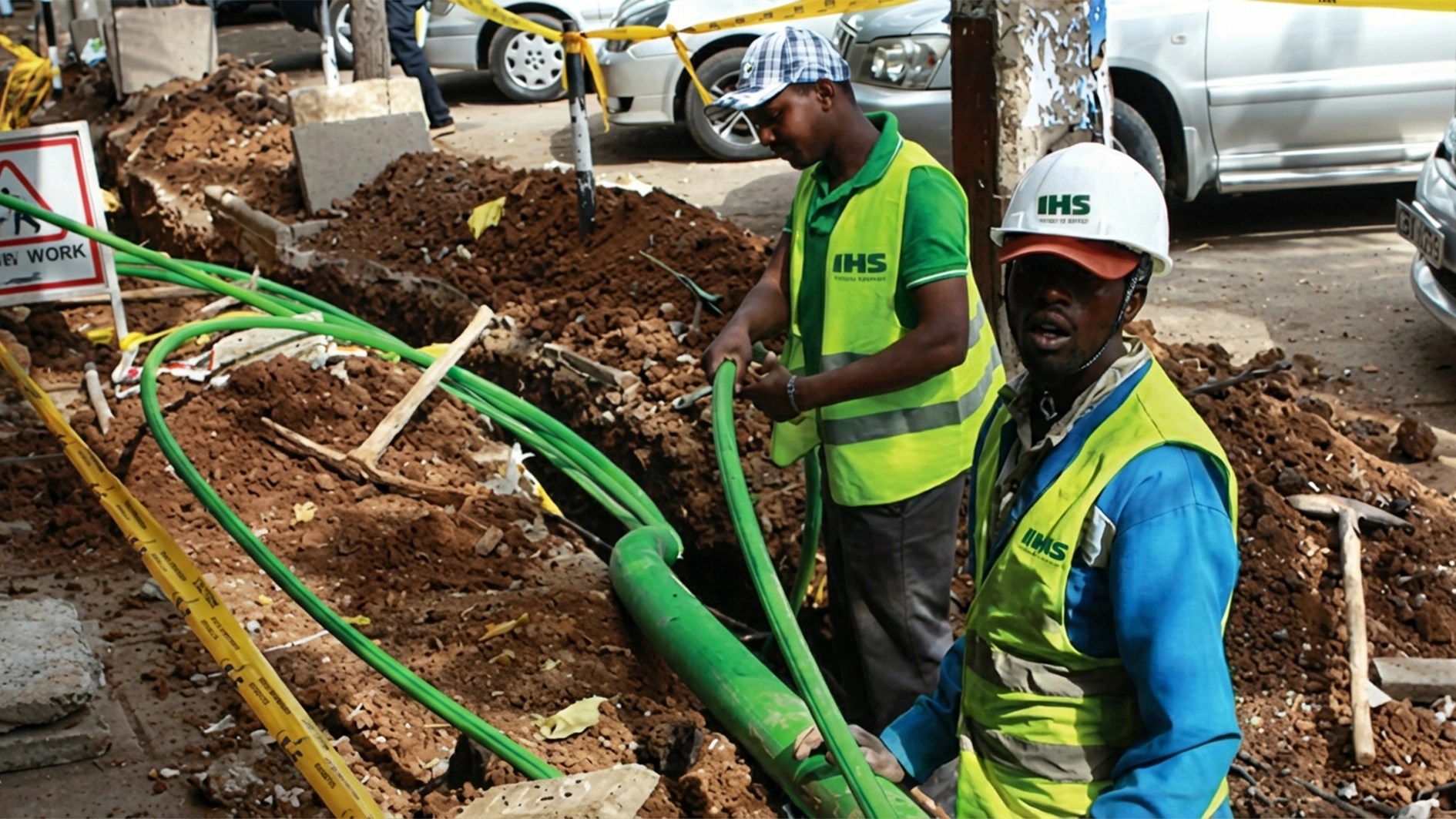
Getting fibre cables into more neighbourhoods is just part of the problem.
Operators also have to deal with issues surrounding infrastructure deployment, maintenance, power supply, rights of way and the economics of connecting individual homes and businesses.
For consumers, the availability of a fibre network in a city does not necessarily mean every household can immediately access it. Last-mile connections and the cost of subscribing to broadband services remain important barriers.
Affordability Will Determine the Next Phase
As Nigeria’s fibre footprint expands, affordability is likely to become increasingly important.
High-speed connectivity only delivers its full economic value when households, businesses and institutions can afford to use it consistently.
This means the next phase of Nigeria’s broadband development will require operators to balance the cost of network expansion with pricing that can support broader adoption.
The Bigger Picture
Nigeria’s fibre boom represents an important improvement in the country’s digital infrastructure, but expanding the network is only half the job.
The harder task is ensuring that the benefits of faster broadband extend beyond major commercial centres and reach a much larger share of households and businesses.
If operators, policymakers and infrastructure providers can overcome the challenges surrounding deployment, affordability and last-mile connectivity, fibre could become a much stronger foundation for Nigeria’s digital economy.
For now, the rapid expansion of fibre shows that Nigeria’s internet infrastructure is moving in the right direction. The next test is whether the country can turn that infrastructure growth into mass-market access to reliable, affordable high-speed internet.