







.
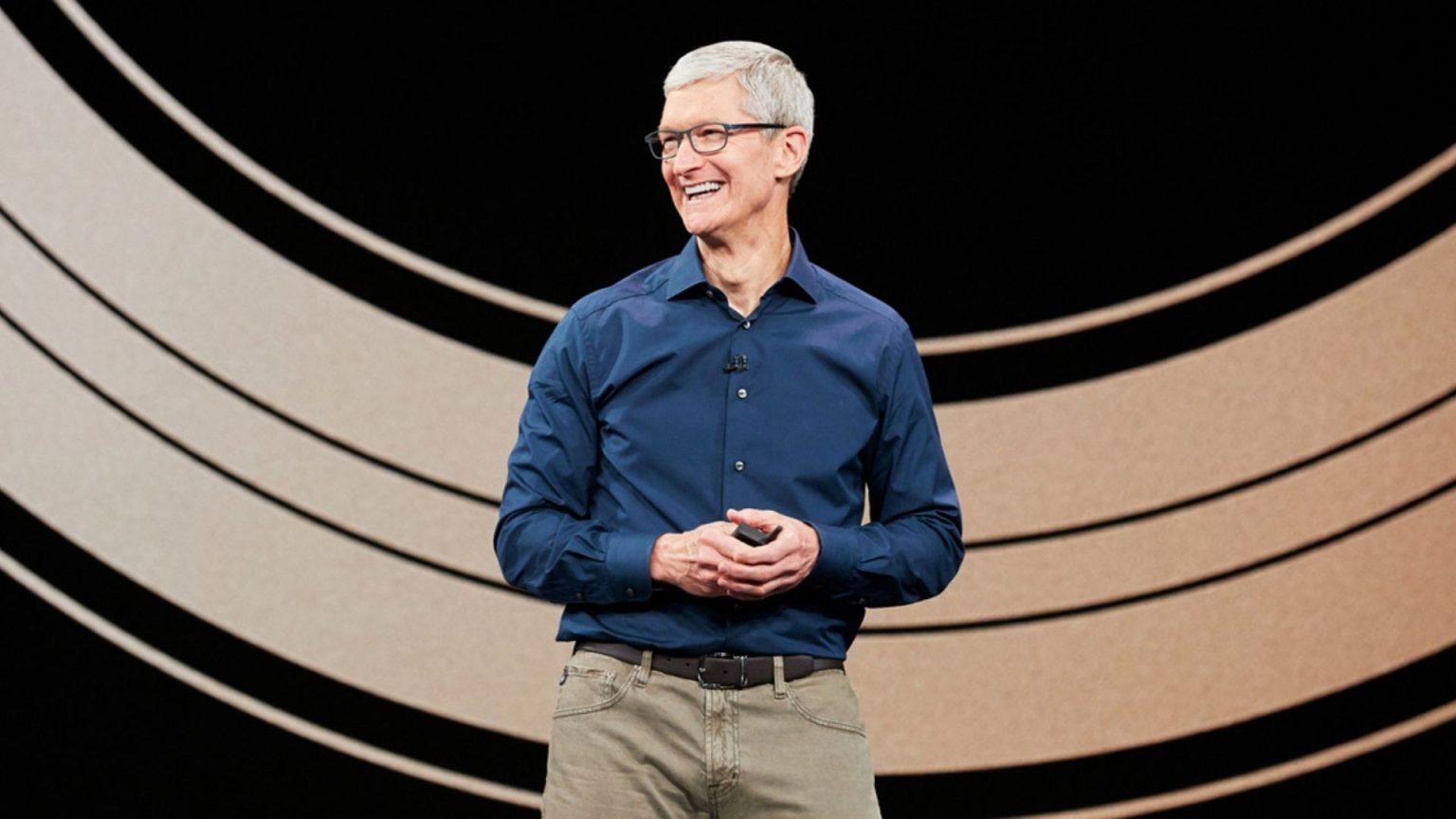
Tim Cook has handed over the leadership of Apple after 15 years at the helm, leaving behind a technology giant valued at roughly $4 trillion but with a surprisingly limited direct footprint across Africa.
Cook’s departure marks the end of one of the most consequential periods in Apple’s history. Since he became chief executive in 2011, the company’s market value has grown from about $350 billion to around $4 trillion, while annual revenue has nearly quadrupled. Apple now has more than 2.5 billion active devices and operates more than 500 retail stores globally.
Yet none of those company-owned stores is located in Africa, highlighting a gap in Apple’s global expansion as John Ternus takes over as CEO.
Apple’s Growth Under Cook
Cook’s tenure was defined less by the introduction of a single revolutionary product and more by the expansion of Apple’s ecosystem and services business.
The iPhone remained the company’s biggest revenue generator, contributing more than half of Apple’s fiscal 2025 revenue at $209.59 billion. At the same time, Services became a major pillar of the business, generating $109.16 billion in the same financial year.
Apple also expanded into products such as the Apple Watch, AirPods and Vision Pro, while moving its Mac computers to Apple-designed chips.
The company’s enormous installed base has further strengthened its services model, allowing users to generate recurring revenue through products such as iCloud, Apple Music and App Store purchases.
Apple’s fiscal 2025 figures show the scale of the transformation. Services accounted for more than $100 billion in revenue, while the company also returned substantial capital to shareholders through share buybacks.
Africa Has Apple Users, But Little Direct Apple Presence
Despite the popularity of Apple devices in several African markets, the company does not separately report revenue generated from the continent.
Africa is grouped with Europe, India and the Middle East in Apple’s financial reporting. That broader region generated $111.03 billion in revenue in fiscal 2025, making it difficult to determine precisely how much of that business comes from African consumers.
Device usage statistics nevertheless show that Apple has established a meaningful user base in parts of the continent.
In August 2026, Apple devices accounted for about 18.57% of mobile web usage across Africa, according to Statcounter data cited by TechCabal. The figure was considerably higher in Ghana and South Africa, while Nigeria recorded a share of about 17.92%.
Kenya, however, stood at roughly 6.8%.
The picture changes when new smartphone shipments are considered. Apple was not among Omdia’s five biggest smartphone vendors in Africa in the first quarter of 2026, with lower-priced devices dominating the market. Transsion, whose brands include Tecno, Infinix and itel, accounted for about 47% of shipments.
That reflects a fundamental challenge for Apple: Africa remains a highly price-sensitive smartphone market, with the most common price segment below $150, while Apple’s devices occupy a substantially higher price range.
Why Apple Still Has No African Store
One of the clearest signs of Apple’s limited physical presence is its retail network.
Apple has expanded its store footprint to more than 500 locations worldwide, but the company has yet to establish a company-owned store anywhere on the African continent.
Consumers in countries such as Nigeria, Kenya and South Africa instead rely on authorised resellers, independent dealers and imported devices.
The arrangement allows Apple to access customers without taking on the cost of establishing and operating its own retail outlets. However, it also means that important parts of the customer experience including pricing, stock availability, financing, trade-ins and repairs are often controlled by local partners.
South Africa has developed one of the continent’s strongest Apple retail ecosystems through iStore, which offers services including trade-ins and certified pre-owned devices.
But the absence of Apple-owned stores means the company has not established the same direct relationship with African consumers that it maintains in other major markets.
Apple Pay Still Covers Only Four African Countries
Apple’s payment business also illustrates the limited depth of its African expansion.
As of August 2026, Apple Pay was available in only four African countries: South Africa, Morocco, Egypt and Mauritius.
South Africa became the first African market to receive Apple Pay in 2021. Morocco followed in 2023, Egypt in 2024 and Mauritius in 2026.
For a service launched globally in 2014, the pace of African expansion has been relatively slow.
Three of the continent’s major technology markets—Nigeria, Kenya and Ghana—still do not have Apple Pay.
Apple has made one notable push into African payments. In May 2026, the company introduced Tap to Pay on iPhone in South Africa through a partnership with fintech company Yoco, allowing merchants to accept contactless payments using an iPhone rather than a dedicated card terminal.
The move represents a more direct attempt by Apple to adapt its financial technology ecosystem to an African market.
The Used-iPhone Market Offers Another Route
The absence of widespread Apple retail infrastructure has not prevented African consumers from building a strong market for iPhones.
Devices reach consumers through authorised resellers, independent dealers, imports, online marketplaces and the continent’s sizeable second-hand smartphone market.
The price difference is significant. Africa’s dominant smartphone segment is below $150, while Apple’s base iPhone 17 launched internationally at $799.
That gap has helped create demand for older and used iPhone models, allowing consumers to enter Apple’s ecosystem at lower prices.
For Apple, this still has commercial value. A consumer purchasing a second-hand iPhone may subsequently pay for iCloud storage, Apple Music, applications and other services.
However, when a used device changes hands between individuals, Apple does not directly capture revenue from the transaction itself.
Four Gaps Await Apple’s Next Chapter
As Ternus begins his tenure, Apple’s African opportunity can broadly be viewed through four areas.
First is direct retail. Company-owned stores could give Apple greater control over pricing, repairs, trade-ins and the overall customer experience.
Second is payments. Expanding Apple Pay beyond its four African markets would bring the service to major economies where consumers already rely heavily on digital payments and mobile financial services.
Third is the pre-owned market. Apple and its partners could develop more formal certified-used programmes, trade-ins and transparent device grading to capture a larger share of the existing second-hand economy.
Finally, there is transparency. Apple does not publish separate African revenue, device sales or developer earnings, making it difficult to assess the true size and trajectory of its business on the continent.
That leaves an unusual picture of Cook’s legacy: he transformed Apple into a global technology powerhouse with billions of active devices, but Africa despite having millions of Apple users remains one of the major markets where Apple’s physical, financial and commercial presence is yet to match the strength of its brand.
For Ternus, closing that gap could become one of the opportunities left behind by Cook’s 15-year tenure.